Hot Dipped Galvanized Steel

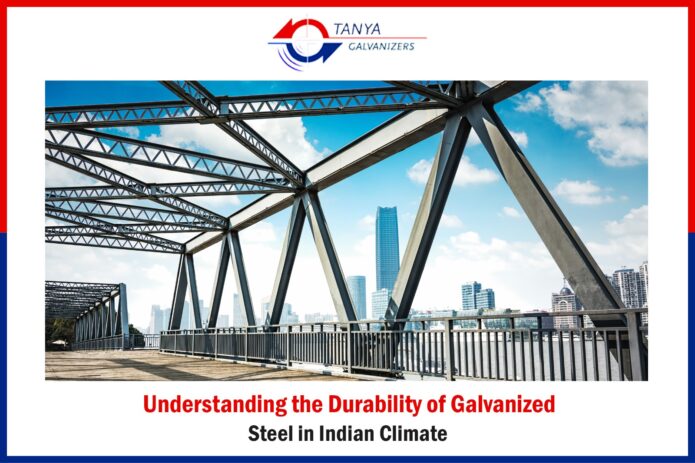
How Long Does Hot Dipped Galvanised Steel Last in the Indian Climate?

When investing in infrastructure, the most critical question engineers and builders ask is: “How long will this last?” In a diverse country like India, the answer depends heavily on the environment. From the salty air of Mumbai’s coast to the humid heat of Kerala and the dry plains of Rajasthan, steel faces constant battle with corrosion.

Hot Dipped Galvanised Steel is the industry standard for winning this battle. But what exactly is the life expectancy of a galvanized coating under Indian conditions? Let’s dive into the science of durability.

The Science of Longevity: How Galvanizing Protects

The process of galvanising steel involves submerging cleaned steel into a bath of molten zinc. This creates a metallurgical bond, meaning the zinc becomes part of the steel rather than just a surface layer.

  1. Barrier Protection: The coating blocks moisture and oxygen.
  2. Sacrificial Protection: If the surface is scratched, the zinc corrodes first, “sacrificing” itself to protect the underlying steel.
  3. The Patina Layer: Over time, the zinc reacts with the atmosphere to form a hard, insoluble zinc carbonate film that slows down further corrosion.

Life Expectancy Across Indian Zones

The durability of Galvanized steel is measured by the “corrosion rate” of zinc in specific environments. According to international standards and durability guides, here is what you can expect in India:

1. Coastal and Marine Areas (C5 Category)

In cities like Chennai, Vizag, or Mumbai, the air is thick with chlorides.

  • Corrosion Rate: High.
  • Life Expectancy: 15 to 25 years.
  • Pro-Tip: For these areas, a thicker coating (85+ microns) is essential to ensure long-term structural integrity.

2. Industrial Hubs (C4 Category)

Areas like GIDC Manjusar or Noida, where sulfur dioxide and pollutants are present.

  • Corrosion Rate: Moderate to High.
  • Life Expectancy: 20 to 30 years.
  • Effect: Chemical pollutants can accelerate the depletion of the galvanized coating.

3. Inland and Rural Areas (C2 & C3 Category)

Inland regions with low humidity and minimal pollution.

  • Corrosion Rate: Very Low.
  • Life Expectancy: 40–50+ years.
  • Result: This is where Hot Dipped Galvanised Steel truly shines, often outlasting the building itself without any maintenance.

Factors That Influence Life Expectancy

Several technical factors affect performance:

  • Thickness of galvanized coating
  • Steel chemistry and surface preparation
  • Quality control during galvanising steel
  • Maintenance and inspection practices
  • Distance from sea or industrial emissions

Advantages of Using Hot-Dipped Galvanised Steel in India

Choosing Hot Dipped Galvanized Steel offers long-term economic and safety benefits:

  • Reduced maintenance frequency
  • Lower life cycle cost
  • High resistance to monsoon moisture
  • Strong performance in temperature fluctuations
  • Sustainable and recyclable material

In infrastructure projects, reduced maintenance means fewer shutdowns and lower operational costs.

Real World Applications in India

Galvanized steel is widely used in:

  • Crash barriers on highways
  • Transmission towers
  • Solar mounting structures
  • Industrial sheds
  • Cable trays and earthing systems
  • Bridges and rail infrastructure

In all these applications, durability directly impacts safety and project ROI.

Why Professional Galvanizing Matters

Not all coatings perform equally. A uniform and properly controlled galvanized coating ensures long service life. Quality inspection after dipping confirms coating thickness and surface finish.

Choosing experienced professionals ensures:

  • Consistent metallurgical bonding
  • Compliance with IS standards
  • Uniform zinc thickness
  • Reliable long term corrosion resistance

Long Term Value Over Initial Cost

While galvanized products may appear slightly higher in upfront cost compared to painted steel, the long term savings are significant. Maintenance cycles are reduced. Structural repairs are minimized. Replacement costs are delayed by decades.

When evaluated over 30 to 50 years, galvanized steel proves to be one of the most economical solutions for Indian climate conditions.

India’s climate can be harsh on steel structures. However, properly Galvanized steel delivers exceptional durability across rural, urban, coastal, and industrial environments. Through professional galvanising steel practices and correct coating thickness, structures can achieve decades of reliable service.

Investing in high-quality Hot Dipped Galvanized Steel ensures safety, longevity, and cost efficiency. Protect your infrastructure with proven galvanizing solutions and secure long term performance in every climate condition.

Secure Your Infrastructure Today Don’t let corrosion eat into your profits. Whether you are working on a coastal power plant or a rural substation, Tanya Galvanizers provides the protection your steel deserves. Contact Tanya Galvanizers for a Quote Today!

===================================================================

FAQ

1. Does Hot Dipped Galvanised Steel rust over time? 

While the zinc coating eventually depletes as it protects the steel, it takes decades to do so. Rust only appears once the zinc layer is completely sacrificed, which takes 20-100 years depending on the environment.

2. How does the Indian monsoon affect galvanized coating? 

Rain actually helps by washing away salt and pollutants. However, constant high humidity in tropical zones can slightly increase the corrosion rate compared to arid regions like Rajasthan.

3. Is galvanizing better than painting for Indian industries? 

Yes. Painting only provides a surface barrier that chips easily. Galvanized steel provides metallurgical bonding and sacrificial protection, eliminating the need for costly repainting every few years.

4. What is the standard coating thickness for long life? 

For most Indian industrial applications, a coating thickness of 65 to 85 microns is standard. Coastal projects may require 100+ microns to ensure a lifespan of more than 20 years.

5. Can I use galvanised steel for underground earthing in India? 

Absolutely. Hot-dipped galvanised steel earthing strips are widely used because they resist soil corrosion better than bare steel, ensuring electrical safety for decades.
Hot Dip Galvanizing Plant_Tanya Galvanizer

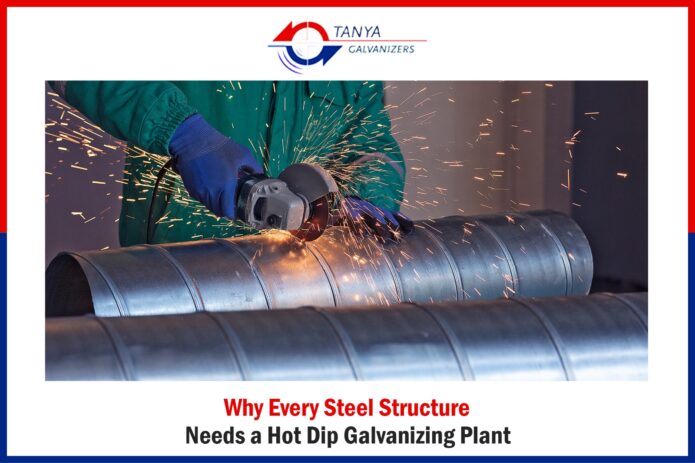
Hot Dip Galvanizing Plant: Ensuring Durability and Corrosion Protection for Steel Structures

Steel is the backbone of modern civilization. From the towering skyscrapers that define our skylines to the intricate bridges connecting nations and the robust frameworks of industrial machinery, steel provides the strength and versatility required for progress. However, steel has a natural enemy: corrosion. In the absence of a professional-grade shield, steel’s structural integrity is constantly under siege from moisture, salt, and industrial pollutants.

This is where the role of a state-of-the-art hot dip galvanizing plant becomes indispensable. For engineers, architects, and project managers, ensuring the longevity of steel structures is not just a logistical necessity; it is a matter of safety, economy, and reputation.

The Science of Longevity: Understanding the Galvanizing Process

The galvanizing process is a sophisticated metallurgical procedure that goes far beyond simple painting or coating. It involves immersing fabricated steel into a bath of molten zinc at temperatures typically around 450°C (840°F). While the process may seem straightforward, the chemical reaction that occurs is profound.

During immersion, the zinc reacts with the iron in the steel to form a series of zinc-iron alloy layers. These layers are topped with a final coating of pure zinc. Unlike paint, which merely sits on the surface and can easily peel or flake, galvanizing creates a metallurgical bond. The coating becomes an integral part of the steel itself. This “sacrificial” protection means that even if the coating is damaged, the surrounding zinc will corrode first, protecting the underlying steel from rust.

Why Hot Dip Galvanizing is the Ultimate Industrial Shield

In the search for industrial galvanizing solutions, decision-makers often weigh various options like powder coating or electroplating. However, hot dip galvanizing remains the gold standard for several authoritative reasons:

  1. Complete Coverage: Unlike manual spray-on coatings, the molten zinc bath ensures that every nook, cranny, and internal hollow of a structure is coated. This is vital for complex lattice structures or hollow sections where internal corrosion could lead to catastrophic failure.
  2. Unmatched Durability: A typical hot dip galvanized coating can protect steel for over 50 years in rural environments and 20 to 25 years in severe urban and coastal settings. This longevity drastically reduces the “Life Cycle Cost” of a project.
  3. Toughness and Abrasion Resistance: The zinc-iron alloy layers are actually harder than the base steel itself. This makes galvanized structures highly resistant to damage during transport, erection, and service.
  4. Ease of Inspection: Galvanizing is an “honest” coating. If the steel is not chemically clean, the zinc will not react with it. Therefore, a continuous, uniform coating is a guaranteed sign of a high-quality finish.

Addressing the Global Challenge of Corrosion

Corrosion protection steel is a global economic priority. Every year, billions of dollars are lost due to the degradation of infrastructure. In a rapidly industrialising nation like India, the demand for high-quality galvanizing services has surged. As we build more coastal infrastructure and chemical plants, the atmospheric conditions become increasingly aggressive.

Choosing a premium hot dip galvanizing plant ensures that your assets are protected against the “silent killer” of metal. By investing in quality galvanizing at the outset, industries avoid the massive costs of maintenance, shutdowns, and premature replacements that plague non-galvanized structures.

Sustainability and Environmental Impact

In today’s ESG-conscious market, sustainability is key. Hot dip galvanizing is a “green” technology. Zinc is a natural element, and both steel and zinc are 100% recyclable. Furthermore, because galvanized steel lasts for decades without maintenance, the carbon footprint associated with repeated painting or replacement is eliminated. When you choose an advanced hot dip galvanizing plant, you are choosing a sustainable future for your infrastructure.

Why Tanya Galvanizer is Your Trusted Partner

When it comes to protecting your investment, there is no room for compromise. Tanya Galvanizer stands at the forefront of the industry, offering world-class industrial galvanizing solutions tailored to meet the most demanding specifications.

Our facility is equipped with cutting-edge technology to handle diverse structural requirements, ensuring that every piece of steel—regardless of its complexity—receives a uniform, high-quality zinc coating. We understand that in construction and manufacturing, time is money. That is why we combine our technical expertise with efficient turnaround times, ensuring your projects stay on schedule without sacrificing quality.

If you are looking for the pinnacle of galvanizing services in India, look no further. We offer the expertise, capacity, and commitment to excellence your projects deserve.

Secure Your Structure’s Future Today

Don’t let corrosion compromise your legacy. Ensure the safety, durability, and aesthetic appeal of your steel structures with the industry’s best. Visit Tanya Galvanizer today to explore our comprehensive hot dip galvanizing services and give your steel the ultimate shield it needs.

 FAQs

1. What is the lifespan of hot dip galvanized steel? 

In most rural environments, galvanized steel can last over 50 years. In more corrosive industrial or coastal areas, it typically provides 20 to 25 years of maintenance-free protection before any significant rust appears.

2. Is hot dip galvanizing better than painting? 

Yes. While paint is a surface coating, galvanizing creates a metallurgical bond with the steel. It offers better abrasion resistance, protects internal surfaces, and provides sacrificial protection that paint cannot offer.

3. Can any size of steel structure be galvanized? 

Most structures can be galvanized, limited only by the size of the zinc kettle at the plant. Larger structures are often designed in modules or “double-dipped” to ensure complete coverage of the entire piece.

4. How does galvanizing protect the environment? 

Galvanizing is sustainable because it uses natural zinc and is fully recyclable. Extending steel’s lifespan for decades reduces the need for frequent replacements and maintenance-related carbon emissions.

5. Why choose Tanya Galvanizer for your project? 

Tanya Galvanizer offers high-capacity, precision-controlled galvanizing services that meet international quality standards. We provide reliable, cost-effective, and durable solutions for diverse industrial and construction needs across India.

Crash Barrier

Crash Barrier: Essential for Roadway and Construction Site Safety

What is a Crash Barrier?

Crash barrier are engineered safety structures that prevent vehicles from veering off the road or colliding with dangerous obstacles. These barriers are a critical line of defense, keeping cars on course and providing controlled redirection during accidents. Used extensively along highways, bridges, and construction zones, crash barriers protect motorists from hazards like steep slopes, water bodies, and oncoming traffic. By absorbing and redirecting impact energy, crash barriers minimize the risk of severe accidents, safeguarding drivers and roadside structures.

Galvanizing of Crash Barriers

Galvanizing crash barrier involves coating them with zinc to enhance their durability and corrosion resistance. Since outdoor elements like moisture, temperature fluctuations, and pollutants constantly expose crash barriers, galvanizing offers a protective layer that shields the underlying steel from rust and degradation. Hot-dip galvanizing is the preferred method, as it ensures a robust bond between the steel and zinc coating, which is essential for long-lasting, low-maintenance barriers. Galvanized crash barriers withstand extreme weather conditions and maintain structural integrity over time, offering reliable protection across various terrains.

Types of Crash Barrier

Crash barrier come in various designs, each suited to specific applications and environments:

1. Roadside Barrier

 Roadside barriers are placed along roadway edges to prevent vehicles from colliding with obstacles or leaving the   road. These Crash barriers are beneficial in areas with nearby slopes, water bodies, or other dangerous obstructions.

 2. Median Barrier

 Median barriers are located along the center of highways to separate opposing traffic lanes. Engineers specially designed these crash barriers to absorb and dissipate impact energy, which reduces the likelihood of crossover collisions and prevents vehicles from crossing into oncoming lanes.

3.Bridge Barrier

 Bridge barriers are positioned along the edges of bridges to protect vehicles and pedestrians from falling off. They   are typically taller than standard roadside barriers and engineered to withstand higher impact forces, preventing   cars, trucks, and cyclists from crossing over into dangerous areas below.

4.Work Zone Barrier

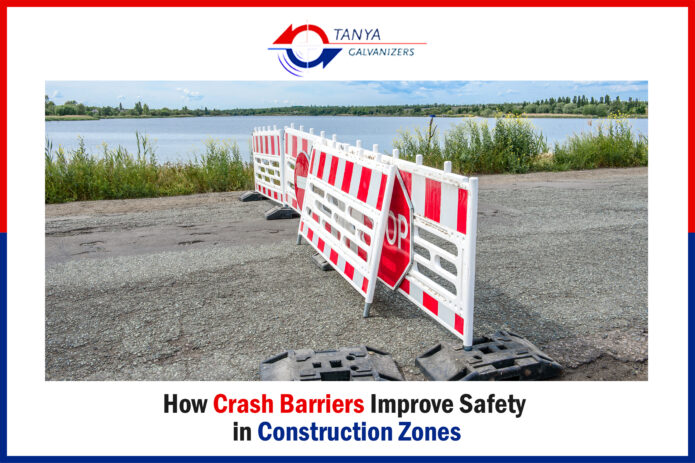
Workers install temporary structures called work zone barriers to safeguard construction sites and redirect traffic. They can consist of concrete, plastic, or metal and are often modular for easy relocation. Work zone barriers are vital in reducing accidents in high-risk areas where workers and moving machinery are present.

5.Flexible Barrier

Flexible barriers like cable are designed to flex when impacted, absorbing kinetic energy over a longer distance. This  crash barriers prevents light vehicles from going off-road, making it suitable for low-speed zones and areas requiring minimal visual obstruction.

6.Rigid Barrier

Rigid crash barriers, usually reinforced concrete, do not absorb impact energy. Instead, they are intended to redirect  vehicles away from hazards. While these barriers offer maximum containment, they are less forgiving than flexible  options, making them suitable for locations where space constraints limit barrier placement options.

Role of Crash Barriers in Protecting Construction Sites

Crash barrier are integral to construction site safety, serving multiple roles in minimizing accidents and ensuring smooth traffic flow. Construction sites, especially those near roads, are high-risk zones where workers and motorists need protection from potential hazards. As a physical shield, crash barrier create a safe boundary that separates construction activities from moving traffic, reducing the likelihood of worksite intrusions and vehicle collisions.

Crash barriers play a vital role in construction zones by serving as visual markers, guiding drivers safely through temporary detours and lanes. This is especially critical during nighttime or adverse weather conditions when visibility is poor. The enhanced visual cues provided by crash barrier help prevent confusion and keep traffic flowing smoothly. Beyond guidance, crash barriers absorb and redirect impact forces, significantly reducing the severity of accidents near construction areas. This dual function not only ensures a safer environment for motorists but also protects workers and equipment, making them indispensable for construction site safety.

Conclusion

Crash barrier are vital in enhancing road safety and protecting construction sites. Galvanized crash barrier benefit from improved durability and corrosion resistance, making them suitable for various terrains and weather conditions. Whether you need roadside, bridge, or work zone barriers, investing in high-quality, galvanized solutions is essential to ensure optimal safety and longevity.

Tanya Galvanizers is a trusted provider of galvanizing services for crash barriers, delivering reliable solutions tailored to diverse needs. Connect with us today if you’re looking for durable and practical crash barriers for your crash barrier construction project or roadway. We offer top-notch galvanizing services to enhance the lifespan and resilience of your crash barriers. Contact Tanya Galvanizers for all your crash barrier secure a safer environment for drivers and workers alike.

Crash Barrier

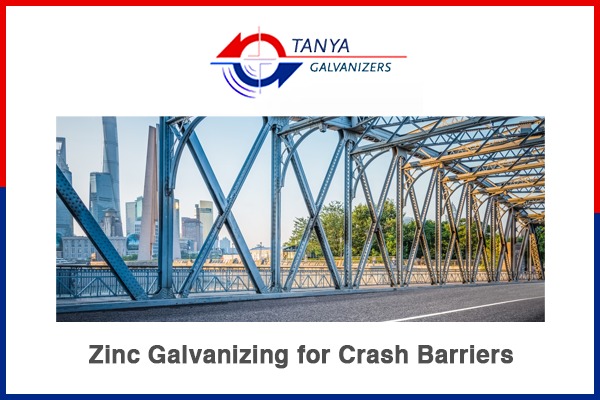
How Zinc Galvanizing Protects Crash Barriers and Saves Lives

Crash barrier are essential safety features on roads, designed to prevent vehicles from veering off the road and to minimize the impact of collisions. Ensuring their durability and effectiveness is critical for road safety.

Zinc galvanizing, a process that involves coating steel with a layer of zinc, has proven to be an effective method for enhancing the longevity and performance of crash barriers. This blog delves into how zinc galvanizing protects crash barriers and ultimately saves lives.

Crash Barrier for Road Safety

Crash barrier are engineered to absorb and dissipate the energy of a vehicle impact, reducing the risk of serious injuries or fatalities. They are commonly found on highways, bridges, and sharp curves where the likelihood of accidents is high. The effectiveness of these barriers is contingent upon their structural integrity and resistance to environmental factors such as corrosion.

The Process of Zinc Galvanizing

Zinc galvanizing involves immersing steel components in molten zinc, forming a metallurgical bond that results in a robust and corrosion-resistant coating. This process can be divided into several stages:

  1. Surface Preparation: The steel surface is cleaned to remove impurities, rust, and scale through processes like degreasing, pickling, and fluxing.
  2. Galvanizing: The cleaned steel is dipped into a bath of molten zinc, which reacts with the steel to form multiple layers of zinc-iron alloy.
  3. Cooling and Inspection: The coated steel is cooled and inspected for uniformity and coating thickness.

Benefits of Zinc Galvanizing for Crash Barriers

  1. Corrosion Resistance: Zinc galvanizing provides superior protection against corrosion. The zinc coating helps in preventing moisture along with other corrosive elements from reaching the steel. This is particularly important for crash barriers exposed to harsh weather conditions, de-icing salts, and pollutants.
  2. Long-Lasting Protection: Galvanized steel can last several decades without significant maintenance, ensuring that crash barriers remain functional over extended periods. This longevity reduces the need for frequent replacements and repairs, which can be costly and disruptive to traffic.
  3. Sacrificial Protection: Zinc galvanizing offers sacrificial protection, meaning that the zinc layer will corrode preferentially to the steel. Even if the coating is damaged, one does not have to worry. As the exposed steel will remain protected by the surrounding zinc. Such a process helps in prolonging the barrier’s lifespan.
  4. Impact Resistance: The metallurgical bond formed during the galvanizing process enhances the impact resistance of the steel, making crash barriers more robust in the event of a collision. This ensures that the barriers can effectively absorb and dissipate impact energy, reducing the severity of accidents.
  5. Cost-Effectiveness: While the initial cost of galvanizing might be higher than other protective coatings, the long-term savings are substantial. Reduced maintenance, longer service life, and decreased frequency of replacements make zinc galvanizing a cost-effective solution for crash barriers.

Case Studies and Real-World Applications

Several real-world examples highlight the effectiveness of zinc-galvanized crash barriers. For instance, in coastal regions where saltwater exposure accelerates corrosion, galvanized crash barriers have demonstrated remarkable durability and performance. Similarly, in areas with extreme weather conditions, such as heavy snowfall or high humidity, galvanized barriers have maintained their integrity and continued to provide reliable protection.

Environmental Considerations

Zinc galvanizing is an environmentally friendly process. Zinc is a naturally occurring element that is essential for all living organisms, and the galvanizing process produces minimal waste. Additionally, galvanized steel is fully recyclable.

Conclusion

Zinc galvanizing plays a pivotal role in enhancing the safety and longevity of crash barriers. By providing superior corrosion resistance, impact durability, and cost-effectiveness, galvanized crash barriers ensure that our roads are safer and more reliable. Investing in zinc-galvanized crash barriers is not just a financial decision but a commitment to saving lives and protecting infrastructure for years to come.

galvanizing-steel-is-sustainable-and-a-must-for-your-business-

Galvanizing Steel Is Sustainable And A Must For Your Business

Businesses all around the world are shifting towards the use of steel rather than iron for a more durable and long lasting structure. One of the main reasons behind this is the longevity that comes with galvanized steel and quality that galvanized delivery even when it comes in contact with reactive agents. It is because of these long lasting properties of galvanized steel along with its noble property it is used and opted across different industries. If you are into business where requirement of durable metal is a must, then you should look forward to invest in galvanized steel for sustainability and larger flexibility for your business. 

Let’s introspect what is galvanized steel and why it is a must for your business.

What is Galvanized Steel?

Galvanized steel is a type of metal that has been developed by coating layer of zinc onto steel. This coating of zinc on to steel is carried out using two galvanizing process hot dip galvanizing and cold galvanizing. In either of cases Galvanized steel is developed with the purpose of protecting against rust and corrosion. It is based on the requirement of business one should select wisely whether to use hot or cold galvanized steel to fulfill their business requirement. 

How Galvanized Steel provides Benefits and Flexibility to your Business

Galvanized steel has multiple usages in a business and can be used to replace even other materials that are deemed expensive or damaged. The supplement of galvanized steel not only provides economical resolution but also provide larger flexibility to business because of its properties. Some of the major benefits of using Galvanized steel are reflected below:

  • Sustainability
  • Durability
  • Proven Quality
  • Cost Effectiveness
  • Honesty
  • Reliability
  • Complete Coverage
  • Predictability
  • Triple protection
  • Toughness
  • Faster Turnaround  

These benefits signified by the galvanized steel ensure a quality advantageous position for your business. Let’s introspect how each of these quality ensure sustainability of galvanized steel, making it a must for your business. 

Sustainability of Galvanized Steel 

The long-term durability provided by galvanizing is achieved at relatively low environmental burden in terms of energy and other globally relevant impacts. One of the main reason behind this being non galvanized steel or other metals has to be maintained from time to time against corrosion and followed up with color to ensure long lasting vendetta. The usage of galvanized steel ensure protection against corrosion resulting in lower maintenance cost ensuring usage of the budget elsewhere, while protecting the environment from harmful fumes of re-coloring over and over again.  

Durability of Galvanized Steel

A galvanized coating is one of the most durable forms of corrosion protection on the market. One of the main reasons behind this is galvanized steel ensures removal all kind of impurities from within the steel. Further, with the process of galvanizing, steel results in getting an additional coating of 85mm if the steel used is 6mm thick. This 85mm coating is corrosion proof against majority of rusting and corrosive agent for a long period of time, making the galvanized steel long lasting and durable.  

Proven Quality of Galvanized Steel

Galvanizing is all around us, with the galvanizing of steel different industry recording increased production over the years. From the smallest to the largest elements, galvanized steel define itself from time to time as trustworthy and reliable, with a track record and proven performance, which is rigorously tested through expert monitoring and performance data collection defining 0.01m² corrosion rates for every 10km².

Cost Effectiveness of Galvanized Steel

The cost of protecting steel from corrosion takes into consideration two important elements, the initial cost of protection and the lifetime cost. On a comparison scale of coloring to that of galvanizing the cost of galvanizing showcases 35% lower lost based on average of initial cost and life time cost. This results in large scale saving for businesses in long run resulting in a cost effective solution for the business.   

Honesty of Galvanized Steel

The metallurgical bond that is framed when steel is plunged into liquid zinc; an aroused covering offers direct, secure assurance consistently. Hot galvanizing sans uncontaminated steel for the rusting cycle to reappear, it is because of this reason failure from underneath with galvanizing steel is almost impossible, making the galvanized steel an ideal material for all season. This surety of protection ensures a consistent honesty of with the usage of galvanized steel. 


Reliability of Galvanized Steel

Galvanizing of steel is a relatively controlled process. This makes the coating a consistent, process. It is because of this reason galvanizing steel is most reliable when it comes to corrosion protection. It is mainly because galvanizing is a metallurgical process that creates a metallurgical bonding rather than chemical or mechanical bonding making the zinc and steels a single structure. This ensures a thorough reliability with galvanized steel.  

Complete Coverage of Galvanized Steel

Galvanizing creates a metallurgical bond between steel and zinc, forming a coating that will last for generations.  This provides superior strength besides superior coverage, so that galvanized steel structures remain protected, even in their most vulnerable areas. This ensures that the structure is protected from inside out even in case of exposure to extreme corrosive condition, providing complete coverage with the usage of galvanized steel on any structure.

Predictability of Galvanized Steel

Galvanized coating on steel showcases a predictable protection against corrosion weather in a linear fashion. The thicknesses of the coating are measurable and offer life spans that can be relied on and forecasted easily. Using this methodology forecasting for coating thickness based on gauge size of the steel and linear predictability calculating possible of corrosion if any is much easier in galvanized steel, making it ideal for usage and predictable for types of usage.

Triple Protection of Galvanized Steel

The usage of galvanized steel ensures triple protection with its usage in the following ways:

  • Physical Barrier: A galvanized coating provides a physical barrier which is metallurgically bonded, and prevents the underlying steel from being exposed to atmospheric conditions.
  • Sacrificial Protection: A galvanized coating will corrode preferentially and slowly highlighting cathodic protection. It is because scratches on galvanized steel do not require repair work, and in case areas do become exposed to humidity and other corrosive elements, the galvanized coating will corrode preferentially and at a slower rate than the underlying steel.
  • Prevention of sideways creep: In the unusual event that a galvanized coating is locally compromised and bare steel is exposed, the zinc coating will limit damage and prevent a form of corrosion known as sideways creep, which in turn will protect the steel by slowing down the overall corrosion process.

This highlights the triple approach to protection with the usage of galvanized steel. 

Toughness of Galvanized Steel

Galvanizing has an abrasion resistance up to ten times better than organic paint coatings. The hot dip process is unique, producing a coating which is bonded metallurgical to the steel.  As a result, galvanized steel has superior resistance to mechanical damage during handling, storage, transport and erection. This unique metallurgical bonding ensures compact toughness to the galvanizing steel making it in uniquely applicable for all possible requirements.

Faster Turnaround for Galvanized Steel

Galvanizing is not a time-consuming process and in reality, it takes just a few minutes to dip prepared steel work into molten zinc to form a durable, reliable coating. This in turn makes the availability of galvanized steel much faster compared to other metals making it an ideal material for usage since it has a fast turnaround time.

Other than these major benefits that your business can have with the usage of galvanized steel, it also reflects other major advantages as below:

  • Low initial cost
  • Longevity
  • Sacrificial anode
  • Multiple approach to galvanizing process as per requirement

With these additional advantages over the existing benefits highlighted above it is clearly visible how galvanized steel can provide a sustainable solution to a business ensuring it a must requirement in business for greater flexibility and edge over natural agents & calamities and other business competitors.  

If you are looking for galvanized steel requirements in your business, then look no more come to us at galvanizer for best in quality galvanized steel. 

Why Choose Us?

At Galvanizer our team work relentlessly to come up with innovation’s that can deliver you ultimate experience of galvanized products. Our multi-lateral testing and development process ensures delivering our client premiere quality of galvanizing process. With decades of industry experience we offer nothing but the best. To know more or to order from us get in touch with us.


IMportance of Galvanizing Steel

Importance of Galvanizing Steel

The galvanization process: 

The galvanization process is an assembling interaction where zinc covering is applied to steel or iron to offer insurance and forestall rusting. A few electrifying cycles are accessible, yet the most usually offered and utilized strategy is hot-plunge arousing. 

Galvanized steel is among the most famous steel types due to its all-inclusive toughness, having the strength and formability of steel in addition to the consumption insurance of the zinc-iron covering. The zinc secures the base metal by going about as a boundary to destructive components. The conciliatory idea of the covering brings about a durable and top-notch steel item. 

The galvanized steel carries out these following steps: 

  1. The steel is cleaned in a degreasing arrangement 
  2. After the cleaning, the steel dipped in salt by being brought down into a tank of weakened hot sulfuric acidic liquid. 
  3. The steel is then fluxed in a fluid arrangement 
  4. After the transition, the steel is excited through submersion in a tank of liquid zinc 
  5. A while later, the steel is assessed for consistency, and a total covering

Advantages of galvanized steel:

Low introductory expense: Contrasted with most treated prepares. Likewise, galvanized steel is promptly ready to utilize when conveyed. It doesn’t need extra planning of the surface, reviews, painting/coatings, and so forth, saving organizations more expenses on their end. 

Longer life: With galvanization, a piece of industrial steel is required to last over 50 years in normal conditions and can last more than 20 years with profound water openness. There is no support necessary. The expanded toughness of the steel’s done item additionally builds the item’s unwavering quality.

Rust resistance: The iron components in steel are inconceivably inclined to rust; however, the expansion of zinc goes about as a defensive cradle between the steel and any moisture or oxygen. Galvanized steel is highly defensive, including sharp corners and breaks that couldn’t be secured with different coatings, making it impervious to harm.

Importance of Galvanized steel: 

Full protection for damaged areas:  Galvanized coatings erodes, especially to steel, giving cathodic or sacrificial security to little areas of steel uncovered through harm. In contrast to natural coatings, little harmed regions need no final detail. 

Complete security: Every piece of a galvanized article is ensured to get protection, even breaks, sharp corners, and unavailable areas. No covering applied to construction or creation after fulfillment can give a similar assurance. 

The simplicity of investigation: Galvanized coatings are evaluated promptly by the eye, and basic non-destructive thickness testing techniques can be utilized. The galvanizing cycle is to such an extent that if coatings seem sound and persistent, they are sound and continuous. 

Conclusion:

Discovering the best administrations/services of Galvanizing Steel? stress less, we here give you the best Galvanizing cycle to advance your nature of steel, venture forward to us for the best administrations/services.

Importance of Crash barrier Hot Dip Galvanizing

What is Hot Dip Galvanizing?

The process of zinc coating on steel and Iron is known as Hot Dip Galvanizing. This process is widely followed to increase the life of the base metal and to ensure that the base metal does not rust with time. Be it a fabricated or an unfabricated piece of metal, the molten zinc is used to coat the base metal at about 840 degree Fahrenheit while performing a Hot Dip Galvanizing.

What is Crash Barrier?

 Crash barrier is a strong fencing system used usually to barricade roads to avoid accidents or crashes. These fencings are made of solid metals acting as strong protection by the sides.

How does a galvanized crash barrier more efficient?

Galvanizing the crash barriers is the smartest option versus any other paint-on options. This process of galvanizing makes the crash barriers more durable and stronger as it gives a complete coverage. The zinc coat also makes the fences more absorbent to shock as these are abrasion resistant. Galvanizing the barriers also helps as the zinc coating grows parallel on the steel making the edges and corners the same thick. 

Crash barrier hot-dip galvanizing acts as an extra protection when a sudden major accident takes place. This is more in demand when fencing on the highways to avoid fatal incidents. 

Be a part of the environment

Zinc as being a renewable resource and available in abundance makes it more environment friendly option. Also, in the process of galvanizing the zinc does not lose its properties making it even more recyclable.

Crash Barrier is of different types including Roadside, Median, Bridge and work zone barriers. 

Galvanizers make it easy for you to get the safest and the most affordable Crash barrier hot-dip galvanizing possible. They followed a step by step process to ensure galvanizing done right, keeping it safe being on the road. They ensure the best quality of hot-dip galvanizing making it possible for the crash barriers to sustain longer in extreme exposure to the environment.

Inspection of the Hot Dipped Galvanizing Process

Inspection of the Hot Dipped Galvanizing Process

Hot dip galvanizing is the process of application of a zinc coating to steel and iron. The process involves dipping of both unfabricated as well as fabricated pieces of steel, or iron into a bath of molten zinc at about 840 degrees Fahrenheit. Galvanization is done to enhance the ability of the base metal that is iron or steel to last for a longer duration of time without getting corroded or rusted. It is precisely where the importance of galvanizing lies. 

Now, before the hot dipped galvanizing process a lot of steps are carried out to make sure that the entire process is carried out in a smooth and uninterrupted manner. In addition to this, utmost care is taken during the entire process to ensure that the intended results are obtained. The final step in the process of galvanization is inspection. Inspection of hot dipped galvanizing process refers to process of checking of the end product after the completion of the galvanizing process. The inspection of hot dip galvanizing process primarily focuses on the following two points. 

The thickness of zinc coating on the base metal 

The thickness of the coating determines the time frame of protection. Usually, the thicker is the coating of zinc, the longer is the expected life span of the base metal. Here are a few important things to consider.

  • Local coating thickness – It is the mean value of the zinc coating that is obtained from the specified number of measurements within an area of reference
  • Mean coating thickness – It refers to the average value of the local thicknesses on the different base metal pieces in the control sample

The appearance of the zinc coating on the base metal

The appearance after the hot dipped galvanization process refers to the visual inspection that checks for any sharp drops or points or any kind of irregularities. Here are the essential points to consider while inspecting the appearance of the zinc coating.

  • While inspecting visually, the coating of zinc must be free from any sharp points or drops
  • There should not be any irregularities 
  • No areas should be uncoated
  • Presence of any kinds of lighter or darker grey spots 

All the points mentioned above should be carefully inspected to make sure that the end product of hot dipped galvanization process are perfect in all aspects and are ideally suited for the intended purpose of use. 


Difference between Hot dip galvanizing and Boronizing-Tanya Galvanizers

Difference Between Hot Dip Galvanizing and Boronizing

Hot dip galvanizing and boronizing are two different processes that involves coating of a base metal or alloy to enhance its life to a significant extent. Both the process forms a protective surface layer on the chosen base metal or alloy but each of the processes are completely different from each other. To learn about the difference between these two processes, let us delve a bit deeper into each process. 

Hot Dip Galvanizing 

Hot dip galvanizing is a process in which the base metal usually steel is dipped into a bath of molten zinc at high temperatures of about 450 degrees Celsius or 840 degrees Fahrenheit. Before dipping, the base metal or steel is cleaned in a caustic solution for removal of dirt and then passed through an acidic solution for removing flakes of iron oxide. The base metal is further cleaned with the help of a chemical cleaning agent like ammonium chloride so that the bonding of the base metal with zinc can be better. 

Boronizing

Boronizing, on the other hand, is process of surface hardening of steel. It is a thermo chemical process for hardening the surface of the base metal usually steel. In this process, boron is added to the base metal or alloy where the atoms of boron are diffused into the surface of the base metal. 

Difference in Functionality

Now, we are clear with the differences between the two processes. Next, we would be learning about the functional differences or the beneficial difference between hot dip galvanizing and boronizing. 

  • Hot dip galvanization of steel helps in the improvement of the corrosion resistance capacity of steel of aby other base metal used. But on the other hand, boronizing case hardens the base metal, thereby providing even higher or superior corrosion resistance. 
  • Boronizing plays a vital role prevention of wear and tear of the base metal, thereby making sure that the base metal becomes highly durable in nature. Reduced wear and tear provide the base metal with great capacity to withstand any external elements without any kind of compromise in the functionality of the base metal so boronized.  
  • Hot dip galvanization only helps in the improvement of the corrosion resistance capacity of the base metal. But boronizing not only case hardens the surface of the base metal but also plays a significant role in improving the temperature stability along with several other mechanical properties of the base metal. 

Why Prashant Galvanizers?

If you are looking forward to premium quality hot dip galvanizing services or boronizing services, do not look any further and come to Prashant Galvanizers. With several years of experience and expertise in this field, Prashant Galvanizers have emerged as one of the top service providers in this field. So, for all sorts of galvanizing or boronizing requirements, all that the users need to do is to get in touch with the expert and dedicated team of Prashant Galvanizers for the best solutions. 

Key Considerations for Hot Dip Galvanizing

Key Considerations for Hot Dip Galvanizing

Hot dip galvanizing is a process where a piece of base metal is immersed into a bath of molten zinc for enhancing the durability and functionality of the base metal. After the completion of the hot dip galvanization process, the base metal is resistant to corrosion and hence appropriately suitable for the intended purpose of use. But the users need to make sure to choose a trusted, reputed, and reliable service provider so that the best practices are followed for the optimum quality galvanizing. One of the most important rules to be followed during the process is that the designer, fabricator, as well as the galvanizer should work together. An appropriate three-way communication plays a vital role in the elimination of most of the problems in the hot dip galvanization process.

To make the entire process smooth and hassle free, we have listed a few of the key considerations for the hot dip galvanizing process. 

Removal of Soil and Grease – Oil, grease, shop oil, and soluble paints are to be removed from the base metal with the help of a hot alkaline cleaner. On the other hand, soils like vinyl, epoxies, welding slag, and asphalt should be removed by grit blasting or other mechanical process of cleaning. 

Pickling – It is the process of chemically cleaning the surface of the base metal. An acid bath is used for the removal of rust and mill scale for providing a chemically clean surface of the base metal. It would be ideal to use hydrochloric acid since it is more environment friendly and does not affect the surface of the base metal. 

Prefluxing – The base metal which is usually steel needs to be immersed in a liquid flux for the removal of oxides and prevent oxidation before finally dipping it into the bath of molten zinc. It would be ideal to use zinc ammonium chloride solution for Prefluxing process.

Galvanizing – The prepared base metal then needs to be immersed into a bath of molten zinc at about 455 degree Celsius or 850 degree Fahrenheit to ensure appropriate metallurgical bonding of zinc to the base metal. 

Finishing – Once the metal is withdrawn from the molten zinc bath, it is essential to remove the excess zinc by draining, vibrating, or centrifuging. Next, it is important to cool the galvanized item in air or by quenching in water. The air quenching process takes a bit longer as compared to the water quenching method but it results in a much better surface finish, and hence an important consideration in architecturally exposed steel. 

Checking or Inspection – Checking or inspection of the final product is the ultimate step as well as consideration in the hot dip galvanizing process. In this step, the thickness and the surface conditions are checked for meeting the quality criteria. 

All these key considerations mentioned above would make sure that the base metal is appropriately galvanized. In this regard, it would be ideal to call in for the helps of a professional service provider for getting the best solutions. In this situation, Prashant Galvanizers would undoubtedly the ideal choice. With several years of experience in this field, Prashant Galvanizers makes sure to provide optimum quality galvanization so that none of the users get even a single chance to complain. So, for all your galvanization requirements, get in touch with the team of Prashant Galvanizers at the earliest.