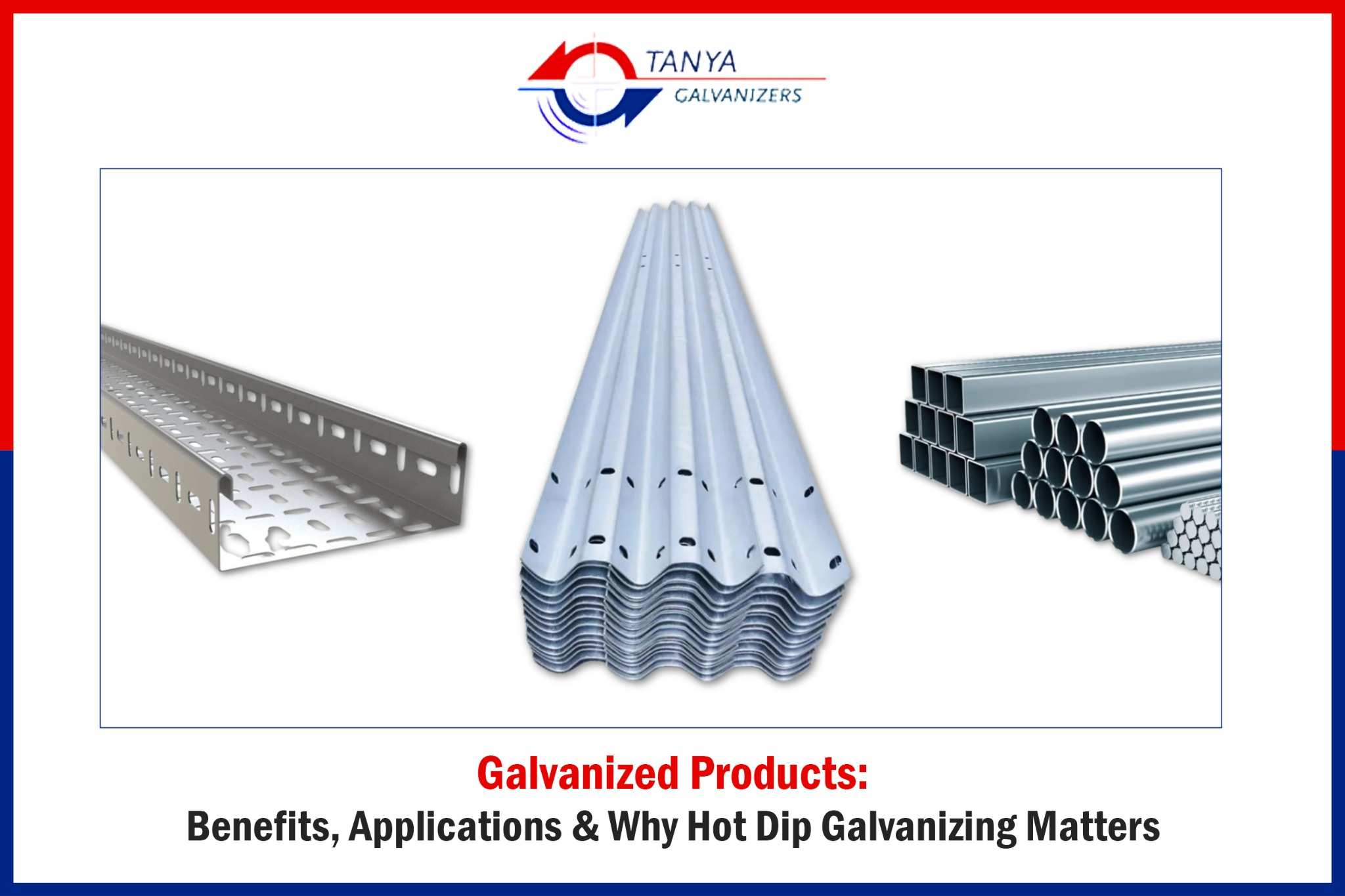
Galvanized Products: Benefits, Applications & Why Hot-Dip Galvanizing Matters

Galvanized Products

Steel is widely used in modern infrastructure, building, and industrial projects. However, when exposed to moisture, chemicals, and varying weather conditions, corrosion can occur, shortening the lifespan of steel parts. Galvanized products are important in such situations since they offer durable corrosion protection and enhance the performance of steel structures in various industries.

Hot-dip galvanizing is a method that has been proven in practice, consisting of coating steel parts with a protective layer of zinc. This zinc layer forms a robust barrier that protects against rust and environmental damage. As a result, various industries can reduce maintenance needs and improve the reliability of their steel structures.

Understanding Galvanized Products and Their Importance

Galvanized products are steel components coated with zinc through the galvanizing process. This zinc layer acts as a shield, preventing the steel from coming into direct contact with the external elements that cause corrosion.

While ordinary coatings offer only surface protection, hot-dip galvanised steel provides long-term protection because the zinc forms a bond with the steel surface; even when some surface damage occurs, the zinc still protects the exposed area through sacrificial protection.

It means that galvanized solutions are suitable for industries in which durability, safety, and a low level of maintenance are important factors.

Benefits of Hot Dip Galvanizing for Steel Protection

1. Superior Corrosion Resistance

The main benefit of hot-dip galvanizing is that it protects steel from corrosion; the zinc coating provides reliable protection against moisture, rain, chemicals, and atmospheric conditions.

As a result, galvanized steel is suitable for use outdoors, for example, on highways, in power infrastructure, in industrial plants, and in construction projects.

2. Long Service Life

Hot-dip galvanised parts are designed to perform satisfactorily for many years with minimal maintenance; the strong metallurgical bond between zinc and steel ensures the coating stays attached even under harsh conditions.

It lowers replacement costs and helps industries get more lifecycle value from their investments.

3. Reduced Maintenance Requirements

Routine painting and surface treatments can increase operating costs, while galvanised steel needs less frequent maintenance than traditional protective coatings.

When accessibility is a problem in infrastructure projects, choosing galvanised solutions can greatly reduce future maintenance needs.

4. Cost-Effective Protection

Even though galvanizing involves an initial outlay, it does offer excellent long-term value since its extended lifespan and lower need for repairs make it a practical option for a number of industrial applications.

Project efficiency can be improved by choosing durable corrosion protection solutions from the start.

Applications of Hot-Dip Galvanized Products

Galvanized steel is used in many industries because of its strength and durability.

  1. Cable Trays and Industrial Electrical Systems

Cable trays are important components used in power plants, manufacturing facilities, and commercial buildings, and their performance may be affected by exposure to humidity and industrial environments.

Hot-dip galvanized cable trays offer extra corrosion protection and help keep the cable management system reliable over long-term operations.

  1. Crash Barriers for Road Safety

Materials used in road safety infrastructure must withstand outdoor conditions. Galvanized crash barriers are commonly used on highways and roads since they provide durability, strength, and resistance to weather exposure.

The zinc coating prolongs the life of safety barriers while reducing maintenance needs.

  1. Substation Structures and Power Infrastructure

Power transmission and distribution systems need sturdy, reliable structures, and substations built with galvanised steel resist corrosion and maintain consistent performance in harsh environments.

Galvanizing helps to improve the reliability of both electrical systems and support structures.

  1. Construction and Industrial Applications

Galvanized steel is frequently used in warehouses, fabrication projects, industrial plants, and structural frameworks since its durability means that it is appropriate for use in situations where long-term performance is needed.

Why Choosing the Right Galvanizing Partner Matters

The quality of galvanizing is determined by adequate surface preparation, effective process control, and proper inspection standards; a trustworthy galvanizing partner makes sure that steel components are given a uniform coating and consistent protection.

In order to guarantee the quality of the coating and meet industry requirements, modern hot-dip galvanizing plants follow controlled processes. Companies can achieve better performance, safety, and durability by choosing an experienced manufacturer.

Choose Tanya Galvanizers for Reliable Galvanizing Solutions

It makes a difference to choose the right galvanizing expert when durability and corrosion protection are important; Tanya Galvanizers offers high-quality galvanizing solutions for a range of industrial applications such as cable trays, crash barriers, substation structures, and other steel components.

Focusing on high-quality processes and dependable protection, Tanya Galvanizers assists various industries in prolonging the life of their steel structures. If you have the next galvanizing requirement, you should think of Tanya Galvanizers as your reliable partner when it comes to durable and high-performance galvanized solutions.

FAQs

1. What are galvanized products?

Galvanized products are steel components coated with zinc to protect them from corrosion. The zinc layer creates a durable protective barrier that improves steel lifespan and makes these products suitable for infrastructure, industrial, and construction applications.

2. Why is hot-dip galvanizing used for steel?

Hot-dip galvanizing is used because it provides long-lasting corrosion protection. The zinc coating bonds strongly with steel and protects it from moisture, weather, and environmental damage with minimal maintenance.

3. Where are galvanized products commonly used?

Galvanized products are used in power infrastructure, construction projects, highways, industrial plants, cable management systems, and safety structures. Their durability makes them suitable for applications requiring reliable performance in challenging environments.

4. How long do galvanized steel products last?

The lifespan of galvanized steel depends on environmental conditions and coating thickness. However, properly galvanized steel can provide decades of corrosion protection, reducing replacement and maintenance requirements for many applications.

5. Why should industries choose Tanya Galvanizers?

Tanya Galvanizers focuses on delivering reliable galvanizing solutions with quality processing and consistent protection. Their expertise in industrial galvanizing applications helps businesses achieve durable steel protection for various infrastructure and industrial requirements.
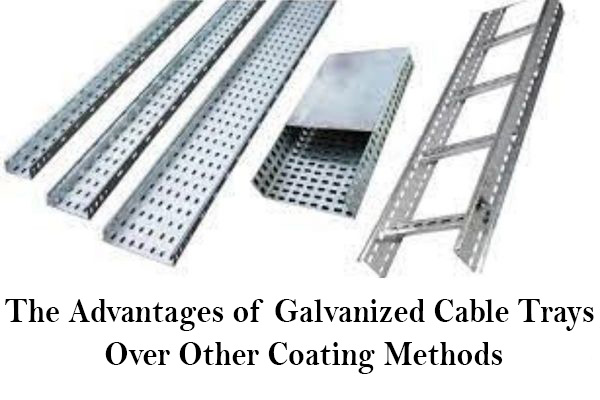
The Advantages of Galvanized Cable Trays Over Other Coating Methods

The Advantages of Galvanized Cable Trays Over Other Coating Methods

Galvanization is a proven method that provides adequate and reasonable protection to the cable trays and materials used during construction. The galvanization process means an additional coating of hot zinc material, which helps offer healthier usage durability.

Today, this blog discusses the advantages of galvanization on cable trays over other coating methods.

Advantages of Galvanized Cable Trays

Corrosion Resistance:

Hot-dip zinc coating plays an exceptional role in cable trays, which provides corrosion resistance to the trays. It is a process that adds a protection shield over the trays, ensuring that they withstand any environmental conditions, including high moisture, chemicals, and highly high-temperature exposure.

Durability: 

Undertaking the galvanization process means investing in a long-term investment that provides long-lasting solutions for galvanized steel. Further, the maintenance and replacement of the trays are reduced to a great extent because of the galvanization process of the steel material, which provides extensive durability.

Strength:

Galvanized trays are engineered with the help of solid steel, which adds strength to the product, helping them support heavy cable loads and stand up high with mechanical stress. Hence, the strength of the overall steel increases due to proper galvanization of cable trays.

Environmental Friendliness:

Considering the environmental aspect, galvanization is a boom to the industry. The only reason for it is because the complete process is eco-friendly, which has less impact on the environment, less consumption of energy, and negligible waste. Also, the best part of the process is that it is the material that can be recycled and aligned with perfect sustainable goals.

Easy Installation:

Galvanized cable trays are easy to install with less human resources and less time. The overall process gets simplified for significant industries managing cables in industrial settings or commercial buildings. The comprehensive solutions provided are easy to adopt and worth considering.

Versatility:

The galvanized cable trays are used and suitable for various applications. It means it is used in power distribution, data centres, manufacturing, industrial, and so on. Hence, these trays are versatile and have significant usage.

Closing:

Tanya Galvanization is the leading name in the market to help clients provide galvanization work for all types of cable trays. Compared to other methods, galvanization is proven to have the advantages mentioned above. Feel free to contact us for further details.


❓ Frequently Asked Questions (FAQ)

  1. What are galvanized cable trays?

Galvanized cable trays are support systems made of steel coated with zinc to prevent corrosion. They provide safe routing and protection for electrical cables in industrial, commercial, and residential projects.

  1. Why choose galvanized cable trays over regular cable trays?

Galvanized trays are more durable, resistant to rust, and cost-effective in the long run. They require less maintenance compared to painted or untreated trays.

  1. How long do galvanized cable trays last?

Depending on environmental conditions, galvanized cable trays can last 20–50 years, making them ideal for long-term infrastructure projects.

  1. What are the main advantages of galvanized cable trays?
  • High corrosion resistance
  • Long service life
  • Cost-effectiveness
  • Easy installation and inspection
  • Suitability for harsh environments
  1. Where are galvanized cable trays commonly used?

They are widely used in:

  • Power plants and substations
  • Industrial factories
  • Commercial buildings
  • Data centers and IT infrastructure
  • Construction and infrastructure projects
  1. Are galvanized cable trays environmentally friendly?

Yes. Zinc is recyclable, and galvanizing reduces the need for frequent replacements, making it a sustainable choice for electrical installations.

  1. What makes Tanya Galvanizers a trusted manufacturer of cable trays?

Tanya Galvanizers is known for:

  • Advanced hot dip galvanizing technology
  • Strict quality control standards
  • Wide product range (cable trays, earthing strips, crash barriers)
  • Proven track record across multiple industries
Key Considerations for Hot Dip Galvanizing

Key Considerations for Hot Dip Galvanizing

Hot dip galvanizing is a process where a piece of base metal is immersed into a bath of molten zinc for enhancing the durability and functionality of the base metal. After the completion of the hot dip galvanization process, the base metal is resistant to corrosion and hence appropriately suitable for the intended purpose of use. But the users need to make sure to choose a trusted, reputed, and reliable service provider so that the best practices are followed for the optimum quality galvanizing. One of the most important rules to be followed during the process is that the designer, fabricator, as well as the galvanizer should work together. An appropriate three-way communication plays a vital role in the elimination of most of the problems in the hot dip galvanization process.

To make the entire process smooth and hassle free, we have listed a few of the key considerations for the hot dip galvanizing process. 

Removal of Soil and Grease – Oil, grease, shop oil, and soluble paints are to be removed from the base metal with the help of a hot alkaline cleaner. On the other hand, soils like vinyl, epoxies, welding slag, and asphalt should be removed by grit blasting or other mechanical process of cleaning. 

Pickling – It is the process of chemically cleaning the surface of the base metal. An acid bath is used for the removal of rust and mill scale for providing a chemically clean surface of the base metal. It would be ideal to use hydrochloric acid since it is more environment friendly and does not affect the surface of the base metal. 

Prefluxing – The base metal which is usually steel needs to be immersed in a liquid flux for the removal of oxides and prevent oxidation before finally dipping it into the bath of molten zinc. It would be ideal to use zinc ammonium chloride solution for Prefluxing process.

Galvanizing – The prepared base metal then needs to be immersed into a bath of molten zinc at about 455 degree Celsius or 850 degree Fahrenheit to ensure appropriate metallurgical bonding of zinc to the base metal. 

Finishing – Once the metal is withdrawn from the molten zinc bath, it is essential to remove the excess zinc by draining, vibrating, or centrifuging. Next, it is important to cool the galvanized item in air or by quenching in water. The air quenching process takes a bit longer as compared to the water quenching method but it results in a much better surface finish, and hence an important consideration in architecturally exposed steel. 

Checking or Inspection – Checking or inspection of the final product is the ultimate step as well as consideration in the hot dip galvanizing process. In this step, the thickness and the surface conditions are checked for meeting the quality criteria. 

All these key considerations mentioned above would make sure that the base metal is appropriately galvanized. In this regard, it would be ideal to call in for the helps of a professional service provider for getting the best solutions. In this situation, Prashant Galvanizers would undoubtedly the ideal choice. With several years of experience in this field, Prashant Galvanizers makes sure to provide optimum quality galvanization so that none of the users get even a single chance to complain. So, for all your galvanization requirements, get in touch with the team of Prashant Galvanizers at the earliest.