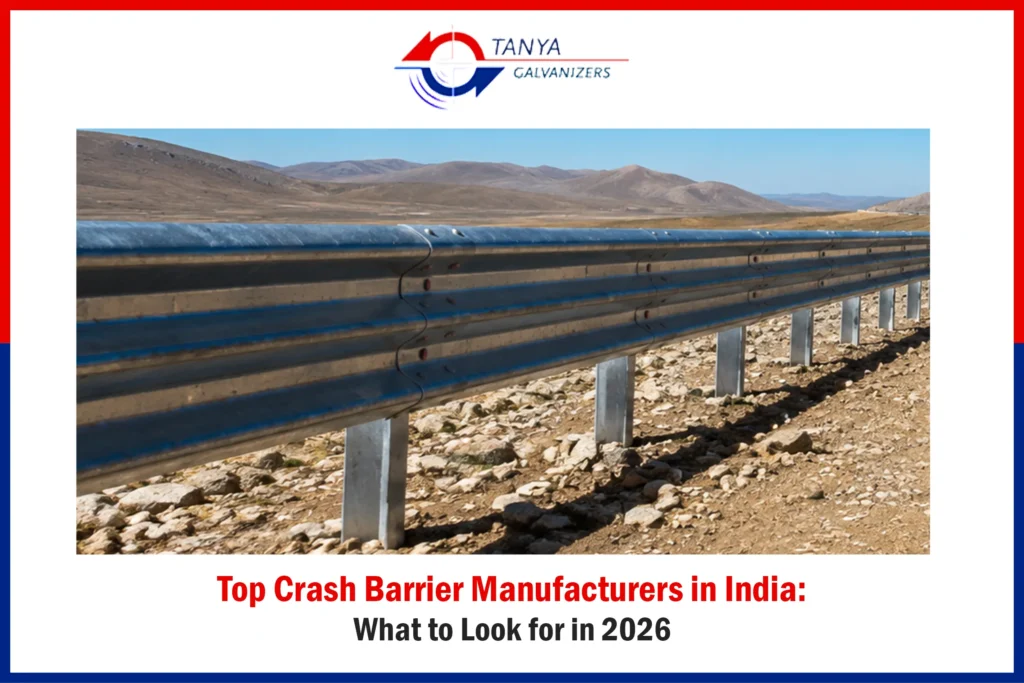
Crash Barrier Manufacturers in India: Highways do not forgive mistakes. A crash barrier is often the only thing standing between a vehicle and disaster. This is exactly why advanced hot dip galvanizing practices have become a quiet game changer for crash barrier quality across India. Reliable crash barrier manufacturers are now focusing on higher coating standards, durability, and strict quality checks to meet the growing expectations of buyers, contractors, and government bodies. They are asking sharper questions before signing a purchase order, ensuring they choose manufacturers who can deliver barriers built to survive decades of weather exposure, impact, and challenging road conditions.
This guide is written for procurement teams, civil contractors, and infrastructure planners. It explains what separates a reliable crash barrier manufacturer from one that simply sells steel.
Why Crash Barrier Quality Cannot Be an Afterthought: Crash Barrier Manufacturers in India
Crash barriers sit outdoors permanently. Rain hits them. Dust settles on them. Vehicles occasionally strike them at speed. A barrier that rusts or weakens early puts lives at risk. It also forces costly replacement work on busy highways. Choosing the right manufacturer is not a small decision. It is a safety decision wrapped inside a budget decision.
Crash barrier manufacturers in India vary widely in capability. Some focus purely on volume. Others focus on durability and long-term performance. The second group is who infrastructure projects actually need.
Hot Dip Galvanizing Is Non-Negotiable
A crash barrier is only as good as its corrosion protection. Hot dip galvanizing remains the gold standard here. Steel is immersed in molten zinc at approximately 450°C, creating a metallurgically bonded zinc coating that protects exposed surfaces, weld areas, and difficult-to-reach sections. This layer resists rust far longer than paint or lighter coatings ever could.
Buyers should always ask one direct question. Is this barrier hot dip galvanized or simply painted to look protected? Painted barriers may look fine on day one. Within a few monsoons, rust creeps in from the edges. A properly galvanized barrier shrugs off humidity, road salt, and pollution for years without visible damage.
What to Look for in a Crash Barrier Manufacturer in India 2026
Several factors separate dependable manufacturers from the rest.
Coating thickness matters first. Standards such as IS 4759 define coating requirements for hot dip galvanized steel structures, including zinc coating thickness based on steel thickness. A trustworthy Crash Barrier Manufacturers in India will share this data without hesitation. If a supplier avoids the question, that itself is a warning sign.
Plant infrastructure matters next. A manufacturer running consistent, well-maintained galvanizing lines tends to deliver more uniform results than one outsourcing the dipping process. Consistency across every barrier in a batch reduces early failure points on site.
Experience with large-scale metal crash barrier projects also matters. A company that has supplied highway authorities, NHAI contractors, or large infrastructure projects understands real-world stress points that smaller workshops often miss, such as drainage holes during dipping and edge protection near bolted joints.
Documentation and testing transparency round out the list. Reliable manufacturers provide test certificates, coating reports, and clear specifications. This transparency reflects expertise built over years, not assumptions made on a spreadsheet.
Bridge Crash Barrier Requirements Are Even Stricter
A bridge crash barrier faces tougher conditions than a standard highway barrier. Wind load, vibration, and moisture from nearby water bodies all increase stress on the structure. Crash Barrier Manufacturers in India supplying bridge applications need tighter quality control and thicker zinc coating to handle this added exposure. Buyers working on bridge projects should specifically confirm that a manufacturer has prior experience with bridge barriers, not just general highway work.
Why This Connects Back to Galvanizing Knowledge
Understanding crash barrier manufacturing naturally connects to understanding galvanizing itself. Many buyers use the terms “galvanizing” and “galvanized” loosely, without realizing one describes a process, and the other describes a finished product. That distinction shapes every purchase decision discussed here, from coating thickness to expected lifespan. A manufacturer who explains this difference clearly is usually a manufacturer who takes the process seriously.
Choose Tanya Galvanizers for Dependable Crash Barrier Protection
Selecting a crash barrier manufacturer is ultimately a matter of trust. It is built on coating quality, plant experience, and honest documentation. Tanya Galvanizers has spent years perfecting hot dip galvanizing for crash barriers, bridge applications, and structural steel projects across India. Every batch undergoes controlled zinc bonding and is checked against thickness standards that matter for long highway life.
If your project demands barriers that withstand monsoons, traffic impacts, and decades of exposure, this is the right time to ask the right questions. Contact Tanya Galvanizers to discuss specifications, request coating reports, and explore reliable crash barrier galvanizing solutions for your next infrastructure project. The right protection starts with the right manufacturing partner.
FAQs
Coating quality decides lifespan more than steel grade alone. Hot dip galvanizing forms a bonded zinc layer across every surface, resisting rust from rain, humidity, and road salt far better than painted alternatives over many years.
Ask for coating thickness reports and test certificates. Reliable manufacturers share this data openly. Visiting the plant or requesting batch samples also helps confirm consistency before placing a large order for highways or bridges.
Yes. Bridge crash barriers face added wind load, vibration, and moisture exposure. They typically require a thicker zinc coating and stricter quality control than standard highway barriers used on straight stretches of road.
Painted barriers cost less initially but wear faster. Paint chips and peels under impact and weather exposure. Galvanized barriers bond zinc directly to steel, offering longer protection with lower long-term maintenance costs.
Hot dip galvanizing covers every weld, bolt hole, and edge completely. This full coverage prevents rust from starting at hidden points, which matters greatly for barriers exposed to constant outdoor stress and impact.