Hot Dipped Galvanized Steel

How Long Does Hot Dipped Galvanised Steel Last in the Indian Climate?

When investing in infrastructure, the most critical question engineers and builders ask is: “How long will this last?” In a diverse country like India, the answer depends heavily on the environment. From the salty air of Mumbai’s coast to the humid heat of Kerala and the dry plains of Rajasthan, steel faces constant battle with corrosion.

Hot Dipped Galvanised Steel is the industry standard for winning this battle. But what exactly is the life expectancy of a galvanized coating under Indian conditions? Let’s dive into the science of durability.

The Science of Longevity: How Galvanizing Protects

The process of galvanising steel involves submerging cleaned steel into a bath of molten zinc. This creates a metallurgical bond, meaning the zinc becomes part of the steel rather than just a surface layer.

  1. Barrier Protection: The coating blocks moisture and oxygen.
  2. Sacrificial Protection: If the surface is scratched, the zinc corrodes first, “sacrificing” itself to protect the underlying steel.
  3. The Patina Layer: Over time, the zinc reacts with the atmosphere to form a hard, insoluble zinc carbonate film that slows down further corrosion.

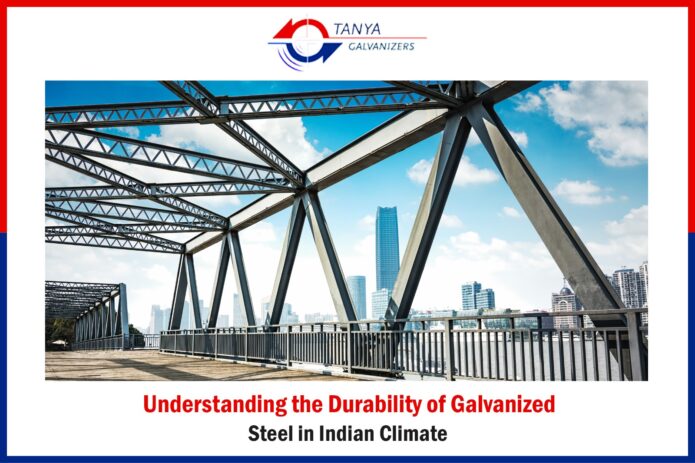
Life Expectancy Across Indian Zones

The durability of Galvanized steel is measured by the “corrosion rate” of zinc in specific environments. According to international standards and durability guides, here is what you can expect in India:

1. Coastal and Marine Areas (C5 Category)

In cities like Chennai, Vizag, or Mumbai, the air is thick with chlorides.

  • Corrosion Rate: High.
  • Life Expectancy: 15 to 25 years.
  • Pro-Tip: For these areas, a thicker coating (85+ microns) is essential to ensure long-term structural integrity.

2. Industrial Hubs (C4 Category)

Areas like GIDC Manjusar or Noida, where sulfur dioxide and pollutants are present.

  • Corrosion Rate: Moderate to High.
  • Life Expectancy: 20 to 30 years.
  • Effect: Chemical pollutants can accelerate the depletion of the galvanized coating.

3. Inland and Rural Areas (C2 & C3 Category)

Inland regions with low humidity and minimal pollution.

  • Corrosion Rate: Very Low.
  • Life Expectancy: 40–50+ years.
  • Result: This is where Hot Dipped Galvanised Steel truly shines, often outlasting the building itself without any maintenance.

Factors That Influence Life Expectancy

Several technical factors affect performance:

  • Thickness of galvanized coating
  • Steel chemistry and surface preparation
  • Quality control during galvanising steel
  • Maintenance and inspection practices
  • Distance from sea or industrial emissions

Advantages of Using Hot-Dipped Galvanised Steel in India

Choosing Hot Dipped Galvanized Steel offers long-term economic and safety benefits:

  • Reduced maintenance frequency
  • Lower life cycle cost
  • High resistance to monsoon moisture
  • Strong performance in temperature fluctuations
  • Sustainable and recyclable material

In infrastructure projects, reduced maintenance means fewer shutdowns and lower operational costs.

Real World Applications in India

Galvanized steel is widely used in:

  • Crash barriers on highways
  • Transmission towers
  • Solar mounting structures
  • Industrial sheds
  • Cable trays and earthing systems
  • Bridges and rail infrastructure

In all these applications, durability directly impacts safety and project ROI.

Why Professional Galvanizing Matters

Not all coatings perform equally. A uniform and properly controlled galvanized coating ensures long service life. Quality inspection after dipping confirms coating thickness and surface finish.

Choosing experienced professionals ensures:

  • Consistent metallurgical bonding
  • Compliance with IS standards
  • Uniform zinc thickness
  • Reliable long term corrosion resistance

Long Term Value Over Initial Cost

While galvanized products may appear slightly higher in upfront cost compared to painted steel, the long term savings are significant. Maintenance cycles are reduced. Structural repairs are minimized. Replacement costs are delayed by decades.

When evaluated over 30 to 50 years, galvanized steel proves to be one of the most economical solutions for Indian climate conditions.

India’s climate can be harsh on steel structures. However, properly Galvanized steel delivers exceptional durability across rural, urban, coastal, and industrial environments. Through professional galvanising steel practices and correct coating thickness, structures can achieve decades of reliable service.

Investing in high-quality Hot Dipped Galvanized Steel ensures safety, longevity, and cost efficiency. Protect your infrastructure with proven galvanizing solutions and secure long term performance in every climate condition.

Secure Your Infrastructure Today Don’t let corrosion eat into your profits. Whether you are working on a coastal power plant or a rural substation, Tanya Galvanizers provides the protection your steel deserves. Contact Tanya Galvanizers for a Quote Today!

===================================================================

FAQ

1. Does Hot Dipped Galvanised Steel rust over time? 

While the zinc coating eventually depletes as it protects the steel, it takes decades to do so. Rust only appears once the zinc layer is completely sacrificed, which takes 20-100 years depending on the environment.

2. How does the Indian monsoon affect galvanized coating? 

Rain actually helps by washing away salt and pollutants. However, constant high humidity in tropical zones can slightly increase the corrosion rate compared to arid regions like Rajasthan.

3. Is galvanizing better than painting for Indian industries? 

Yes. Painting only provides a surface barrier that chips easily. Galvanized steel provides metallurgical bonding and sacrificial protection, eliminating the need for costly repainting every few years.

4. What is the standard coating thickness for long life? 

For most Indian industrial applications, a coating thickness of 65 to 85 microns is standard. Coastal projects may require 100+ microns to ensure a lifespan of more than 20 years.

5. Can I use galvanised steel for underground earthing in India? 

Absolutely. Hot-dipped galvanised steel earthing strips are widely used because they resist soil corrosion better than bare steel, ensuring electrical safety for decades.
Hot Dip Galvanizing Plant_Tanya Galvanizer

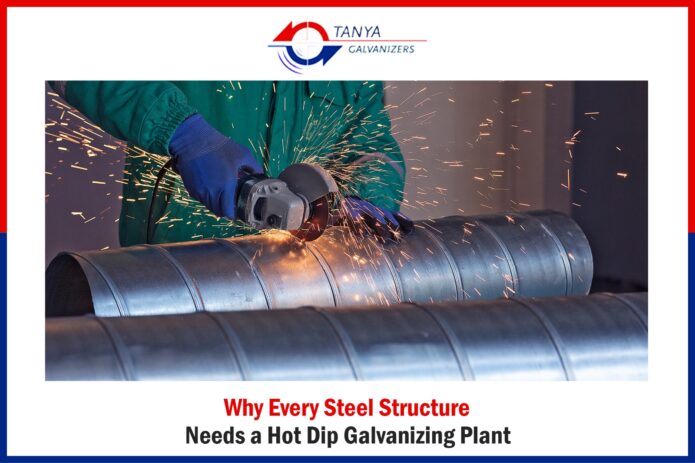
Hot Dip Galvanizing Plant: Ensuring Durability and Corrosion Protection for Steel Structures

Steel is the backbone of modern civilization. From the towering skyscrapers that define our skylines to the intricate bridges connecting nations and the robust frameworks of industrial machinery, steel provides the strength and versatility required for progress. However, steel has a natural enemy: corrosion. In the absence of a professional-grade shield, steel’s structural integrity is constantly under siege from moisture, salt, and industrial pollutants.

This is where the role of a state-of-the-art hot dip galvanizing plant becomes indispensable. For engineers, architects, and project managers, ensuring the longevity of steel structures is not just a logistical necessity; it is a matter of safety, economy, and reputation.

The Science of Longevity: Understanding the Galvanizing Process

The galvanizing process is a sophisticated metallurgical procedure that goes far beyond simple painting or coating. It involves immersing fabricated steel into a bath of molten zinc at temperatures typically around 450°C (840°F). While the process may seem straightforward, the chemical reaction that occurs is profound.

During immersion, the zinc reacts with the iron in the steel to form a series of zinc-iron alloy layers. These layers are topped with a final coating of pure zinc. Unlike paint, which merely sits on the surface and can easily peel or flake, galvanizing creates a metallurgical bond. The coating becomes an integral part of the steel itself. This “sacrificial” protection means that even if the coating is damaged, the surrounding zinc will corrode first, protecting the underlying steel from rust.

Why Hot Dip Galvanizing is the Ultimate Industrial Shield

In the search for industrial galvanizing solutions, decision-makers often weigh various options like powder coating or electroplating. However, hot dip galvanizing remains the gold standard for several authoritative reasons:

  1. Complete Coverage: Unlike manual spray-on coatings, the molten zinc bath ensures that every nook, cranny, and internal hollow of a structure is coated. This is vital for complex lattice structures or hollow sections where internal corrosion could lead to catastrophic failure.
  2. Unmatched Durability: A typical hot dip galvanized coating can protect steel for over 50 years in rural environments and 20 to 25 years in severe urban and coastal settings. This longevity drastically reduces the “Life Cycle Cost” of a project.
  3. Toughness and Abrasion Resistance: The zinc-iron alloy layers are actually harder than the base steel itself. This makes galvanized structures highly resistant to damage during transport, erection, and service.
  4. Ease of Inspection: Galvanizing is an “honest” coating. If the steel is not chemically clean, the zinc will not react with it. Therefore, a continuous, uniform coating is a guaranteed sign of a high-quality finish.

Addressing the Global Challenge of Corrosion

Corrosion protection steel is a global economic priority. Every year, billions of dollars are lost due to the degradation of infrastructure. In a rapidly industrialising nation like India, the demand for high-quality galvanizing services has surged. As we build more coastal infrastructure and chemical plants, the atmospheric conditions become increasingly aggressive.

Choosing a premium hot dip galvanizing plant ensures that your assets are protected against the “silent killer” of metal. By investing in quality galvanizing at the outset, industries avoid the massive costs of maintenance, shutdowns, and premature replacements that plague non-galvanized structures.

Sustainability and Environmental Impact

In today’s ESG-conscious market, sustainability is key. Hot dip galvanizing is a “green” technology. Zinc is a natural element, and both steel and zinc are 100% recyclable. Furthermore, because galvanized steel lasts for decades without maintenance, the carbon footprint associated with repeated painting or replacement is eliminated. When you choose an advanced hot dip galvanizing plant, you are choosing a sustainable future for your infrastructure.

Why Tanya Galvanizer is Your Trusted Partner

When it comes to protecting your investment, there is no room for compromise. Tanya Galvanizer stands at the forefront of the industry, offering world-class industrial galvanizing solutions tailored to meet the most demanding specifications.

Our facility is equipped with cutting-edge technology to handle diverse structural requirements, ensuring that every piece of steel—regardless of its complexity—receives a uniform, high-quality zinc coating. We understand that in construction and manufacturing, time is money. That is why we combine our technical expertise with efficient turnaround times, ensuring your projects stay on schedule without sacrificing quality.

If you are looking for the pinnacle of galvanizing services in India, look no further. We offer the expertise, capacity, and commitment to excellence your projects deserve.

Secure Your Structure’s Future Today

Don’t let corrosion compromise your legacy. Ensure the safety, durability, and aesthetic appeal of your steel structures with the industry’s best. Visit Tanya Galvanizer today to explore our comprehensive hot dip galvanizing services and give your steel the ultimate shield it needs.

 FAQs

1. What is the lifespan of hot dip galvanized steel? 

In most rural environments, galvanized steel can last over 50 years. In more corrosive industrial or coastal areas, it typically provides 20 to 25 years of maintenance-free protection before any significant rust appears.

2. Is hot dip galvanizing better than painting? 

Yes. While paint is a surface coating, galvanizing creates a metallurgical bond with the steel. It offers better abrasion resistance, protects internal surfaces, and provides sacrificial protection that paint cannot offer.

3. Can any size of steel structure be galvanized? 

Most structures can be galvanized, limited only by the size of the zinc kettle at the plant. Larger structures are often designed in modules or “double-dipped” to ensure complete coverage of the entire piece.

4. How does galvanizing protect the environment? 

Galvanizing is sustainable because it uses natural zinc and is fully recyclable. Extending steel’s lifespan for decades reduces the need for frequent replacements and maintenance-related carbon emissions.

5. Why choose Tanya Galvanizer for your project? 

Tanya Galvanizer offers high-capacity, precision-controlled galvanizing services that meet international quality standards. We provide reliable, cost-effective, and durable solutions for diverse industrial and construction needs across India.

Crash Barrier

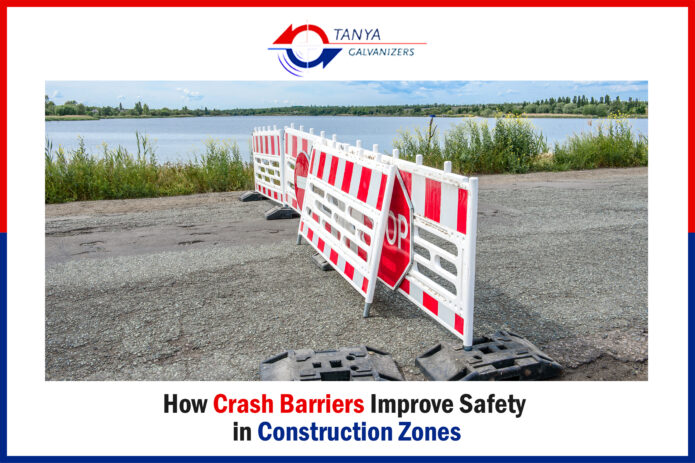
Crash Barrier: Essential for Roadway and Construction Site Safety

What is a Crash Barrier?

Crash barrier are engineered safety structures that prevent vehicles from veering off the road or colliding with dangerous obstacles. These barriers are a critical line of defense, keeping cars on course and providing controlled redirection during accidents. Used extensively along highways, bridges, and construction zones, crash barriers protect motorists from hazards like steep slopes, water bodies, and oncoming traffic. By absorbing and redirecting impact energy, crash barriers minimize the risk of severe accidents, safeguarding drivers and roadside structures.

Galvanizing of Crash Barriers

Galvanizing crash barrier involves coating them with zinc to enhance their durability and corrosion resistance. Since outdoor elements like moisture, temperature fluctuations, and pollutants constantly expose crash barriers, galvanizing offers a protective layer that shields the underlying steel from rust and degradation. Hot-dip galvanizing is the preferred method, as it ensures a robust bond between the steel and zinc coating, which is essential for long-lasting, low-maintenance barriers. Galvanized crash barriers withstand extreme weather conditions and maintain structural integrity over time, offering reliable protection across various terrains.

Types of Crash Barrier

Crash barrier come in various designs, each suited to specific applications and environments:

1. Roadside Barrier

 Roadside barriers are placed along roadway edges to prevent vehicles from colliding with obstacles or leaving the   road. These Crash barriers are beneficial in areas with nearby slopes, water bodies, or other dangerous obstructions.

 2. Median Barrier

 Median barriers are located along the center of highways to separate opposing traffic lanes. Engineers specially designed these crash barriers to absorb and dissipate impact energy, which reduces the likelihood of crossover collisions and prevents vehicles from crossing into oncoming lanes.

3.Bridge Barrier

 Bridge barriers are positioned along the edges of bridges to protect vehicles and pedestrians from falling off. They   are typically taller than standard roadside barriers and engineered to withstand higher impact forces, preventing   cars, trucks, and cyclists from crossing over into dangerous areas below.

4.Work Zone Barrier

Workers install temporary structures called work zone barriers to safeguard construction sites and redirect traffic. They can consist of concrete, plastic, or metal and are often modular for easy relocation. Work zone barriers are vital in reducing accidents in high-risk areas where workers and moving machinery are present.

5.Flexible Barrier

Flexible barriers like cable are designed to flex when impacted, absorbing kinetic energy over a longer distance. This  crash barriers prevents light vehicles from going off-road, making it suitable for low-speed zones and areas requiring minimal visual obstruction.

6.Rigid Barrier

Rigid crash barriers, usually reinforced concrete, do not absorb impact energy. Instead, they are intended to redirect  vehicles away from hazards. While these barriers offer maximum containment, they are less forgiving than flexible  options, making them suitable for locations where space constraints limit barrier placement options.

Role of Crash Barriers in Protecting Construction Sites

Crash barrier are integral to construction site safety, serving multiple roles in minimizing accidents and ensuring smooth traffic flow. Construction sites, especially those near roads, are high-risk zones where workers and motorists need protection from potential hazards. As a physical shield, crash barrier create a safe boundary that separates construction activities from moving traffic, reducing the likelihood of worksite intrusions and vehicle collisions.

Crash barriers play a vital role in construction zones by serving as visual markers, guiding drivers safely through temporary detours and lanes. This is especially critical during nighttime or adverse weather conditions when visibility is poor. The enhanced visual cues provided by crash barrier help prevent confusion and keep traffic flowing smoothly. Beyond guidance, crash barriers absorb and redirect impact forces, significantly reducing the severity of accidents near construction areas. This dual function not only ensures a safer environment for motorists but also protects workers and equipment, making them indispensable for construction site safety.

Conclusion

Crash barrier are vital in enhancing road safety and protecting construction sites. Galvanized crash barrier benefit from improved durability and corrosion resistance, making them suitable for various terrains and weather conditions. Whether you need roadside, bridge, or work zone barriers, investing in high-quality, galvanized solutions is essential to ensure optimal safety and longevity.

Tanya Galvanizers is a trusted provider of galvanizing services for crash barriers, delivering reliable solutions tailored to diverse needs. Connect with us today if you’re looking for durable and practical crash barriers for your crash barrier construction project or roadway. We offer top-notch galvanizing services to enhance the lifespan and resilience of your crash barriers. Contact Tanya Galvanizers for all your crash barrier secure a safer environment for drivers and workers alike.

galvanized steel coating

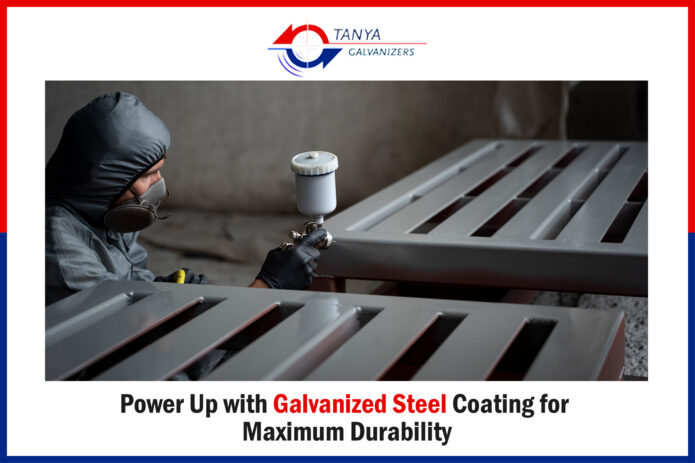
Power Up with Galvanized Steel Coating for Maximum Durability

The process of galvanization, crucial for achieving a strong and durable steel coating, involves immersing steel in hot molten zinc. This process, which results in a long-term durable galvanized steel coating, is characterized by a series of alloy treatments that create a robust metallurgical bond. 

The galvanization process is complete when iron and zinc react, coating the steel in a protective layer. This involves dipping the steel in molten zinc, forming a durable outer layer. The coating’s thickness depends on the steel type, its thickness, and EN ISO 1461 standards. However, three exceptions may alter this: one results in a thinner coating, while the other two increase the layer thickness, offering added protection for specific applications.

Appearance of Galvanized Coating

Let us now dig down into the details that increase the maximum durability of galvanized steel coating. Below are the points that will give you a proper understanding of the process and how the overall work promotes long-term durability.

Pre-Galvanizing Consideration

Specifiers and end users often require a controlled galvanized steel coating that facilitates their work. Pre-galvanization achieves this demand by meticulously preparing hot dip galvanized steel with a uniform, bright color and attractive appearance.This process, often automated, ensures the efficient production of high-quality galvanized steel products. 

The protective quality of galvanized coating remains consistent, though color variations—from bright silver to matte gray—may occur due to natural differences in the material and galvanization process. These color changes don’t impact durability but are a result of the metallurgical reactions. The steel’s chemical composition and condition play a crucial role in achieving successful hot dip galvanizing.

Galvanized steel is a formation of zinc-iron alloy coating that demands a proper chemical composition with accuracy and precision. You can hot-dip galvanize all types of commonly used steel and iron. However, steel with specific silicon content reacts quickly between iron and zinc, so workers take proper care of it..

To get the best result, the customer must ensure proper care and safety in terms of preparing the steel components. This step ensures that the construction and design work goes properly with proper galvanized steel coating.

Thickness of Galvanized Coatings

Now comes the question of how the thickness of the galvanization is considered. Hence, here are the details. It is segregated into three parts, and here is the list. 

(1) Centrifuged galvanized coating

(2) Surface roughening

(3) Galvanizing reactive steel

Final Words:

At Tanya Galvanization, we are dedicated to providing our clients with comprehensive support and high-quality galvanized steel coatings. Our years of experience and in-depth knowledge of market strategies enable us to use the latest processes to deliver the perfect work our clients expect.


zinc galvanized steel

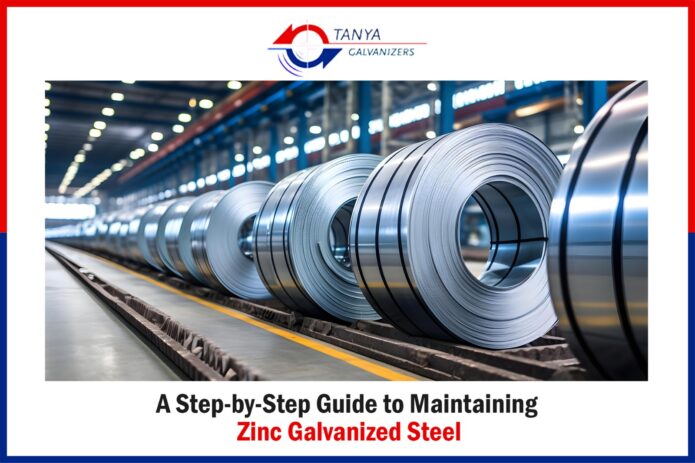
A Step-by-Step Guide to Maintaining Zinc Galvanized Steel

Hot-dip galvanizing is the finest process that helps maintain sustainability for the materials to produce corrosion resistance. Galvanizing work is performed by immersing iron or steel in a bath of hot molten zinc. The reaction that develops in the entire process is forming a coat on the surfaces to create a firm, thick layer on the steel. 

FACTORS AFFECTING THE SHELF LIFE OF THE GALVANIZED STEEL GRATING.

Certain factors increase the durability and effectiveness of galvanized steel gratings. The core factors include high-quality galvanization, the environment in which installers place gratings, the frequency of the materials present, and the level of corrosive raw materials available.

The galvanization process demands thorough work, which involves coating steel with a layer of molten zinc, which adds additional protection to the materials. However, weather conditions can naturally and physically compromise the integrity of the level of these protective layers.    

Today, the idea of discussion on the blog is to share a full-fledged guide which helps maintain “zinc galvanized steel”.

Regular Cleaning

Zinc galvanized steel demands regular cleaning when it comes to maintaining it. The main reason for this is that these zinc galvanized steel will have dirt, dust, and grime that later time will decrease the potential of the material, leading to rust and corrosion.

Thus, it is necessary to maintain a time for regular cleaning with the help of a brush to remove all the loose particles. Cleaning this can be done with mild soap and warm water. Once the process is complete, let it dry, and later on, apply the chemical to moisten the surface so that it can have longevity and avoid damage to the galvanized coating.

Inspection for damage or wear

Regularly, a team of skilled staff must keep track of inspecting the damages that may occur on these zinc galvanized steel. Inspecting for damages is the crucial part; hence, the team must be more cautious to ensure they don’t leave any items behind. Additionally, the team needs to check welded joints regularly to avoid any significant harm in the future.. 

Repairing minor damages

If there are any small damages or minor changes, repairing the same can be done in-house with the help of the right tools and materials. This entire process includes applying sand to the damaged area. It continues with the need to use a rust-resistant primer and cover it up; painting over that area makes it richer. The painting of the area is done with the help of zinc-rich paint. 

Protecting against corrosion

To protect zinc galvanized steel from corrosion, applying a proper coating of protective paint is advisable. It helps create a barrier and shield on the steel bars to form a secured element with the segment to increase its lifespan.

Final Words: 

Tanya Galvanizers is your one-stop service provider to assist you with the proper and accurate process of zinc galvanized steel and the steps to ensure it lasts. To know more about this, kindly connect with us today!


Galvanized Crash Barriers

Ensuring Road Safety with Galvanized Crash Barriers!

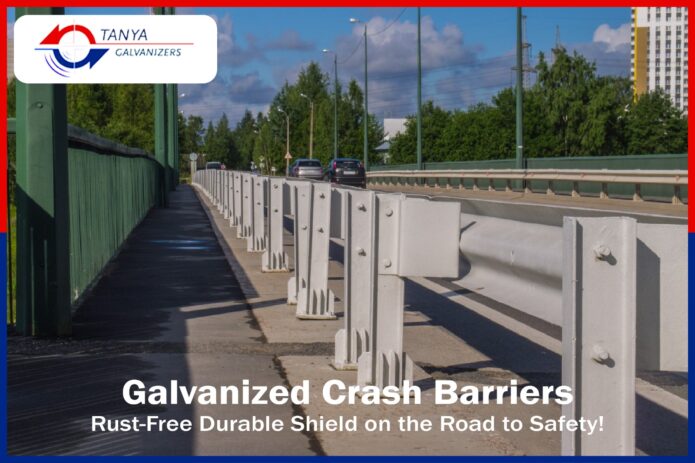
As individuals, we need to ensure that road safety measures are taken with high priority so that there is no loss to the lives of any people. One of the initiatives considered for road safety is having galvanized crash barriers that remain rust-free. The most common crash barriers on busy roads are metal beam crash barriers or guardrails. The design of these barriers is in such a form that provides accurate protection to vehicle occupants during traffic accidents. However, these metal beams undergo a proper galvanisation process before getting installed at the site. It is extremely affordable and comes with a top-notch hot-dip zinc coating.

Using the proper approach of galvanization, the barriers will remain rust-free, l will have considerably long durability, and it will look like a brand new deployment for an extended period. Since these crash barriers are integral to road safety measures, we adhere to the following standards and guidelines when processing work for the road crash barrier galvanization.

It is always noticed that roadside accidents occur only when there is ignorance and a casual approach while driving vehicles. The moment leads to life-threatening events, and people may face the consequences. Thus, sign boards must be installed on the roadsides to avoid such events and be more careful. With a need for crash barriers, another thing that is taken into consideration is proper calculations that determine the appropriate requirements, such as the size, length, speed, and volume of the traffic. The perfect place for installing barriers is at bridge ends, crossroads, deep slopes, poles, or areas that may pose a danger.

Different Types of Crash Barriers

There are multiple types of crash barriers which are used. The demand for galvanized barriers depends on the core requirements. Once we know which kind of crash barrier is required, we proceed with galvanization work by providing galvanized steels. The list of the kinds of barriers are listed below,

– Road Signage and Markings

– Synergy with Road Lighting

– Traffic Calming Measures

– Emergency and Breakdown Lanes

Are you Looking for Reliable Galvanization Service Providers for Crash Barriers?

We are the leading and renowned name in the industry, providing all significant galvanisation types of work. When it comes to road safety measures, proper galvanization is required. Hence, you can contact us, and we assure you that with correct adherence to the standards and process, we will provide accurate Galvanization services.

Benefits of Galvanized Steel Structures

Benefits of Galvanized Steel Structures

Galvanized Steel Structures

In an industrial finishing process, Hot-Dip Galvanizing plays an important role. It is the process that provides proper corrosion protection to Galvanized steel structures. The immersing of structures is in a bath of 450°C molten zinc. It undergoes several layers of zinc that help extend the structure’s life for some more years. It is the work used in both commercial and industrial sectors, as it has maximum corrosion protection for any product and steel structure.

In this article, we will be listing the benefits of Galvanized steel structures that need to be known by industrial and commercial sectors.

Cost Effective:

The process of Galvanizing is deficient as compared to other most commonly used coatings recommended for steel. The work of galvanizing is to ensure that the steels are protected. Because of the use of galvanizing technology, the cost of labor application has risen compared to the factory’s operational work.

Reduces Maintenance:

For the long-term durability of the steel structures, the use of galvanizing is considered. It is the stage where the cost and maintenance of the construction reduce as it lasts for a long. Only the cost and maintenance rise for the plants in remote areas, or the situation is that the plants are no longer in existence.

Extended Shelf Life:

The galvanized steel coatings helps increases the shelf life of the structure along with preventing them from severe exposure. Structural members’ shelf life is significantly increased with proper coating and finishing work, even in extreme urban and coastal directions.

Reliability:

Galvanizing is carried out with two significant standards that help increase performance and coating life. It delivers the maximum strength and with the highest thickness applied that are reliable and predictable.

Hard Coating:

The galvanizing coating is quite unique, which is why it is reliable and durable. To avoid mechanical damage for any reason, the galvanizing company uses the technology of metallurgical structure for the steel members.

High Protective Level:

The unique galvanizing coating helps protect the structure that may have been damaged during transit. The entire process is automated. Galvanized coatings are preferable to steel members to keep them safe from damage and other problems. It is a way better option than organic coatings.

Full-fledged protection:

Every part of a galvanized article is protected, and the industries that provide galvanizing services follow the necessary detailing and ensure the utmost security for the structures. No layers are applied to a structure or fabrication after the fulfilment of the system with the same method and protection technique.

Easy Inspection:

The team uses multiple stages to ensure that galvanized coatings are assessed readily and are simple to install. Companies working on this technology use a process that has an easy layer with continuous efforts and the highest thickness testing that is non-destructive.

Erection Time High:

Once the galvanized steel members are received at the site, they are ready for use. Here the staff has not had to invest additional time and energy to prepare the surface, inspect the area, and get the painting done. The steel members are ready to use with a completely assembled structure that is ready to be used for the next construction project.

No Natural reasons can delay the process of galvanization. It is because the protective coating can easily be applied to the surface of steel members in a fraction of the time.

Conclusion:

Galvanizers is the leading and trusted name in the market for providing the best Galvanizing services. The company has a team of skilled staff who put their input into getting the galvanization coating done quickly in the steel structure. To know more about it, get in touch with us today.