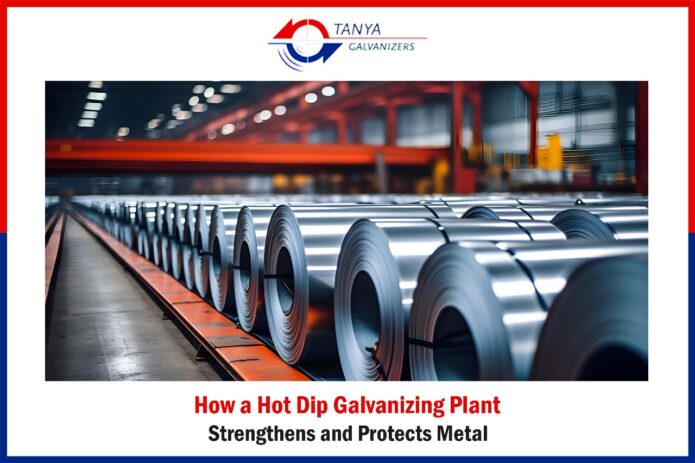
Steel is among the most widely used construction and infrastructure materials — but its vulnerability to corrosion poses a serious challenge. The solution? A properly managed hot dip galvanizing plant that applies a protective zinc coating through galvanized dipping dramatically extends metal lifespan and reliability.
At a quality galvanizing plant, even simple steel parts become corrosion-resistant, durable components — ideal for harsh climates, industrial environments, and long-term structural use. Here’s how the process helps you get the most out of your metal investments.
Why Galvanized Dipping Matters: What Happens In the Plant
- Cleaning & Surface Preparation
Every metal item is first thoroughly cleaned — degreased, pickled, rinsed — to remove oil, rust, and mill scale. This step ensures that the zinc coating will bond evenly and firmly to the steel surface. - Immersion in Molten Zinc
Next, the cleaned steel is immersed in molten zinc (around 450 °C). In this bath, a metallurgical reaction occurs: zinc-iron alloy layers form and fuse with the steel. This isn’t just a surface spray — the zinc becomes an integral part of the steel structure. - Cooling, Inspection & Quality Control
After dipping, the metal is carefully cooled and inspected. A properly applied plant ensures uniform coating thickness, a smooth finish, and full coverage, even in corners, edges, and recesses. This ensures full protection wherever corrosion might start.
Top 5 Ways a Galvanizing Plant Extends Metal Life
1. Superior Corrosion Resistance
The galvanised layer provides both barrier and cathodic protection. Even if the surface gets scratched, the zinc sacrifices itself, protecting the steel underneath. This dramatically reduces corrosion risk, even in coastal or humid environments.
2. Long-Term Durability and Low Maintenance
Galvanized metal can last several decades — often 30–50 years or more — without frequent maintenance. Compared to painted or untreated steel, this offers substantial savings and better lifespan for infrastructure or industrial use.
3. Uniform and Complete Coverage
Because galvanized dipping coats the entire surface — including hard-to-reach spots — the protection is consistent and reliable. This matters especially for parts exposed to rain, soil, or industrial pollutants.
4. Increased Mechanical Strength and Impact Resistance
The zinc-iron alloy layers formed during dipping are harder than base steel. This protects against abrasion, impacts, and physical wear; valuable for structural steel, guardrails, frameworks, and more.
5. Cost-Effective Over Life Cycle
Although initial galvanizing costs may be higher than simple paint jobs, galvanized steel’s longevity and minimal maintenance result in lower total lifecycle costs. For large infrastructure or industrial projects, this long-term saving is significant.
Real-World Applications: Where Hot Dip Galvanized Steel Shines
- Bridges, Overpasses & Highway Structures — guardrails, crash barriers, structural beams.
- Industrial Plants and Structural Frameworks — columns, platforms, storage tanks, support structures.
- Utility & Power Installations — transmission towers, cable trays, electrical supports.
- Coastal / Marine Installations — piers, railings, fences exposed to salt air and high humidity.
- Public Infrastructure & Outdoor Equipment — street light poles, signage supports, fencing.
Whenever steel is exposed to weather, moisture, soil, or industrial conditions, a reliable hot dip galvanizing plant can ensure long life and structural integrity.
Why Choosing the Right Galvanizing Plant Matters?
Not all galvanization is equal. A professional, experienced plant ensures:
- Thorough surface preparation to guarantee strong zinc bonding.
- Controlled zinc bath conditions for consistent, high-quality coating.
- Rigorous inspection and testing to meet global standards.
- Documentation of coating thickness and quality for long-term traceability.
These factors ensure you get reliable, durable galvanized dipping results, not just a short-term surface coating.
Steel structures are constantly threatened by rust, moisture, and other environmental factors. A trusted hot dip galvanizing plant offers reliable, long-term protection through galvanized dipping, ensuring metal lasts decades with minimal upkeep.
If you are planning infrastructure, industrial, or outdoor steel projects, choose galvanisation. Choose durability, safety, and value.
Contact us today to learn how our hot dip galvanizing plant can extend the lifespan of your metal structures and ensure lasting performance, because quality matters.
Frequently Asked Questions (FAQ)
Q1: Can galvanised steel withstand coastal and saltwater environments?
Yes. The zinc coating is highly resistant to salt and humidity. With proper galvanizing, steel remains protected even in coastal regions.
Q2: Does hot dip galvanizing affect steel strength or load-bearing capacity?
No. The process does not compromise steel’s mechanical strength. In fact, the zinc-iron alloy adds protective resilience without weakening the base metal.
Q3: What happens if the zinc coating gets scratched or damaged over time?
The galvanised coating offers sacrificial protection. Even if scratched, the surrounding zinc corrodes first, protecting the steel beneath. Small damages can also be touched up with zinc-rich paint if needed.
Q4: Is galvanizing more expensive than painting? Is it worth it?
Initial galvanizing cost may be higher, but long-term benefits — corrosion resistance, durability, low maintenance — make it much more cost-effective than repeated painting or replacements.