Steel is one of the most widely used materials in construction, infrastructure, manufacturing, and industrial applications. However, exposure to moisture, chemicals, and changing weather conditions can quickly lead to corrosion. Rust not only weakens steel structures but also increases maintenance costs and safety risks over time.
This is where Hot Dipped Galvanized Steel becomes an ideal solution. By applying a protective zinc coating to steel surfaces, industries can improve durability, reduce maintenance, and extend the life of structures exposed to harsh environments.
What is Hot Dipped Galvanized Steel?
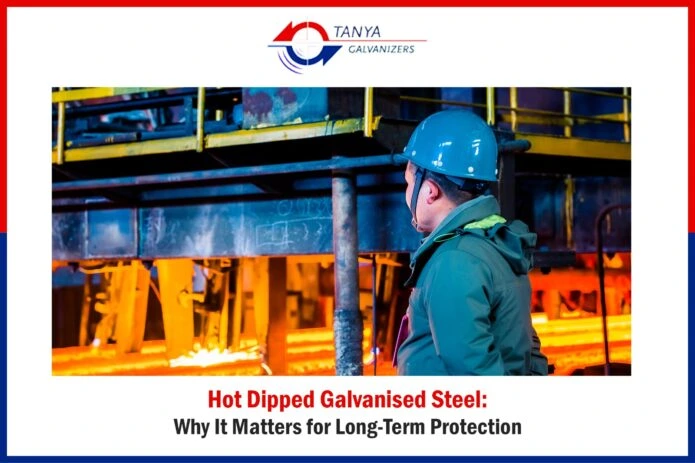
Hot Dipped Galvanized Steel is steel that has been coated with a protective layer of zinc through a hot-dip galvanizing process. In this process, cleaned steel is immersed into molten zinc at high temperatures. The zinc forms a strong metallurgical bond with the steel surface.
This protective layer acts as a shield against moisture and oxygen, which are the primary causes of rust and corrosion.
The result is highly durable zinc galvanized steel that can perform reliably for decades in demanding conditions.
How Does the Galvanizing Process Work?
The hot-dip galvanizing process involves several important steps:
- Surface Cleaning
Steel is cleaned to remove dirt, grease, rust, and mill scale. - Pickling Process
The steel is treated with acid solutions to eliminate oxidation. - Flux Treatment
Flux is applied to prevent oxidation before zinc coating. - Hot-Dip Galvanizing
Steel is dipped into molten zinc at around 450°C. - Cooling and Inspection
The coated steel is cooled and inspected for coating thickness and quality.
This process creates multiple protective zinc-iron alloy layers that provide long-lasting corrosion resistance.
Benefits of Hot Dipped Galvanized Steel
1. Excellent Corrosion Resistance
One of the biggest advantages of Hot Dipped Galvanized Steel is its superior resistance to rust and corrosion. The zinc coating protects the steel even in humid, coastal, and industrial environments.
2. Long Service Life
Properly galvanized steel can last for decades with minimal maintenance. This makes it a cost-effective investment for industries looking for long-term durability.
3. Lower Maintenance Costs
Unlike painted steel, zinc galvanized steel requires very little maintenance. Regular repainting and repairs are significantly reduced.
4. Strong Surface Protection
The zinc coating protects not only the outer surface but also corners, edges, and hard-to-reach areas.
5. Sustainable and Eco-Friendly
Galvanized steel is recyclable and contributes to sustainable construction practices. Zinc itself is a natural and reusable material.
Common Applications of Zinc Galvanized Steel
Hot-dip galvanizing is widely used across multiple industries because of its reliability and performance.
Major Applications Include:
- Transmission towers
- Highway crash barriers
- Solar panel mounting structures
- Industrial sheds
- Agricultural fencing
- Pipes and tubes
- Construction frameworks
- Street lighting poles
- Railway infrastructure
- Telecom towers
Industries prefer zinc galvanized steel because it performs well in outdoor and heavy-duty environments.
Why Industries Prefer Hot Dipped Galvanized Steel
Modern infrastructure projects demand materials that can handle challenging environmental conditions. Corrosion-related failures can result in operational downtime, repair expenses, and safety concerns.
Hot Dipped Galvanized Steel helps solve these challenges by offering:
- Long-term structural integrity
- Better lifecycle value
- Reduced replacement frequency
- Improved reliability
- Better resistance to mechanical damage
For industries operating in coastal regions or chemical environments, galvanized steel becomes even more important.
Factors That Affect Galvanized Steel Performance
While galvanizing provides excellent protection, certain factors influence its performance and lifespan.
Important Factors Include:
- Zinc coating thickness
- Environmental exposure
- Steel composition
- Humidity levels
- Chemical exposure
- Maintenance practices
Choosing an experienced galvanizing company ensures proper coating quality and long-term protection
How to Choose the Right Galvanizing Partner
Selecting the right galvanizing service provider is important for ensuring coating consistency and product durability.
Look for These Qualities:
- Industry experience
- Modern galvanizing facilities
- Quality testing standards
- Large processing capacity
- Compliance with international standards
- Timely project delivery
Reliable galvanizing companies maintain strict process control to ensure durable and uniform zinc coatings.
Future of Galvanized Steel in Infrastructure
As industries focus more on sustainable and durable infrastructure, the demand for Hot Dipped Galvanized Steel continues to grow. Governments and private sectors are increasingly choosing galvanized materials for bridges, highways, renewable energy projects, and industrial facilities.
Its combination of durability, affordability, and low maintenance makes galvanized steel a preferred solution for future-ready infrastructure development.
Conclusion
Corrosion remains one of the biggest threats to steel structures worldwide. Investing in Hot Dipped Galvanized Steel helps industries improve durability, reduce maintenance costs, and extend the service life of critical infrastructure.
From construction and transportation to energy and agriculture, zinc galvanized steel continues to play a major role in modern industrial applications. Choosing high-quality galvanizing solutions ensures long-lasting performance and dependable protection in every environment.
Get Reliable Galvanizing Solutions Today
Looking for durable and high-performance galvanized steel solutions for your next project?
Choose professional galvanizing services that deliver consistent coating quality, corrosion resistance, and long-term value for industrial and infrastructure applications.
Explore advanced galvanizing solutions today and protect your steel structures for years to come.
FAQs
1. What is the difference between galvanized steel and normal steel?
Galvanized steel has a protective zinc coating that prevents rust and corrosion, while normal steel is more vulnerable to environmental damage.
2. How long does Hot Dipped Galvanized Steel last?
Depending on the environment and coating thickness, galvanized steel can last several decades with minimal maintenance.
3. Is zinc galvanized steel suitable for outdoor use?
Yes. It is widely used outdoors because of its strong corrosion resistance and weather durability.
4. Can galvanized steel be recycled?
Yes. Both steel and zinc are recyclable, making galvanized steel an environmentally friendly material.