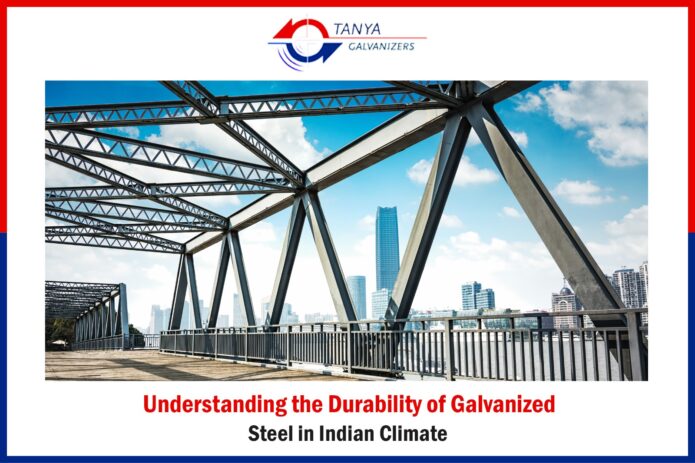
When investing in infrastructure, the most critical question engineers and builders ask is: “How long will this last?” In a diverse country like India, the answer depends heavily on the environment. From the salty air of Mumbai’s coast to the humid heat of Kerala and the dry plains of Rajasthan, steel faces constant battle with corrosion.
Hot Dipped Galvanised Steel is the industry standard for winning this battle. But what exactly is the life expectancy of a galvanized coating under Indian conditions? Let’s dive into the science of durability.
The Science of Longevity: How Galvanizing Protects
The process of galvanising steel involves submerging cleaned steel into a bath of molten zinc. This creates a metallurgical bond, meaning the zinc becomes part of the steel rather than just a surface layer.
- Barrier Protection: The coating blocks moisture and oxygen.
- Sacrificial Protection: If the surface is scratched, the zinc corrodes first, “sacrificing” itself to protect the underlying steel.
- The Patina Layer: Over time, the zinc reacts with the atmosphere to form a hard, insoluble zinc carbonate film that slows down further corrosion.
Life Expectancy Across Indian Zones
The durability of Galvanized steel is measured by the “corrosion rate” of zinc in specific environments. According to international standards and durability guides, here is what you can expect in India:
1. Coastal and Marine Areas (C5 Category)
In cities like Chennai, Vizag, or Mumbai, the air is thick with chlorides.
- Corrosion Rate: High.
- Life Expectancy: 15 to 25 years.
- Pro-Tip: For these areas, a thicker coating (85+ microns) is essential to ensure long-term structural integrity.
2. Industrial Hubs (C4 Category)
Areas like GIDC Manjusar or Noida, where sulfur dioxide and pollutants are present.
- Corrosion Rate: Moderate to High.
- Life Expectancy: 20 to 30 years.
- Effect: Chemical pollutants can accelerate the depletion of the galvanized coating.
3. Inland and Rural Areas (C2 & C3 Category)
Inland regions with low humidity and minimal pollution.
- Corrosion Rate: Very Low.
- Life Expectancy: 40–50+ years.
- Result: This is where Hot Dipped Galvanised Steel truly shines, often outlasting the building itself without any maintenance.
Factors That Influence Life Expectancy
Several technical factors affect performance:
- Thickness of galvanized coating
- Steel chemistry and surface preparation
- Quality control during galvanising steel
- Maintenance and inspection practices
- Distance from sea or industrial emissions
Advantages of Using Hot-Dipped Galvanised Steel in India
Choosing Hot Dipped Galvanized Steel offers long-term economic and safety benefits:
- Reduced maintenance frequency
- Lower life cycle cost
- High resistance to monsoon moisture
- Strong performance in temperature fluctuations
- Sustainable and recyclable material
In infrastructure projects, reduced maintenance means fewer shutdowns and lower operational costs.
Real World Applications in India
Galvanized steel is widely used in:
- Crash barriers on highways
- Transmission towers
- Solar mounting structures
- Industrial sheds
- Cable trays and earthing systems
- Bridges and rail infrastructure
In all these applications, durability directly impacts safety and project ROI.
Why Professional Galvanizing Matters
Not all coatings perform equally. A uniform and properly controlled galvanized coating ensures long service life. Quality inspection after dipping confirms coating thickness and surface finish.
Choosing experienced professionals ensures:
- Consistent metallurgical bonding
- Compliance with IS standards
- Uniform zinc thickness
- Reliable long term corrosion resistance
Long Term Value Over Initial Cost
While galvanized products may appear slightly higher in upfront cost compared to painted steel, the long term savings are significant. Maintenance cycles are reduced. Structural repairs are minimized. Replacement costs are delayed by decades.
When evaluated over 30 to 50 years, galvanized steel proves to be one of the most economical solutions for Indian climate conditions.
India’s climate can be harsh on steel structures. However, properly Galvanized steel delivers exceptional durability across rural, urban, coastal, and industrial environments. Through professional galvanising steel practices and correct coating thickness, structures can achieve decades of reliable service.
Investing in high-quality Hot Dipped Galvanized Steel ensures safety, longevity, and cost efficiency. Protect your infrastructure with proven galvanizing solutions and secure long term performance in every climate condition.
Secure Your Infrastructure Today Don’t let corrosion eat into your profits. Whether you are working on a coastal power plant or a rural substation, Tanya Galvanizers provides the protection your steel deserves. Contact Tanya Galvanizers for a Quote Today!
===================================================================
FAQ
1. Does Hot Dipped Galvanised Steel rust over time?
While the zinc coating eventually depletes as it protects the steel, it takes decades to do so. Rust only appears once the zinc layer is completely sacrificed, which takes 20-100 years depending on the environment.
2. How does the Indian monsoon affect galvanized coating?
Rain actually helps by washing away salt and pollutants. However, constant high humidity in tropical zones can slightly increase the corrosion rate compared to arid regions like Rajasthan.
3. Is galvanizing better than painting for Indian industries?
Yes. Painting only provides a surface barrier that chips easily. Galvanized steel provides metallurgical bonding and sacrificial protection, eliminating the need for costly repainting every few years.
4. What is the standard coating thickness for long life?
For most Indian industrial applications, a coating thickness of 65 to 85 microns is standard. Coastal projects may require 100+ microns to ensure a lifespan of more than 20 years.
5. Can I use galvanised steel for underground earthing in India?
Absolutely. Hot-dipped galvanised steel earthing strips are widely used because they resist soil corrosion better than bare steel, ensuring electrical safety for decades.